
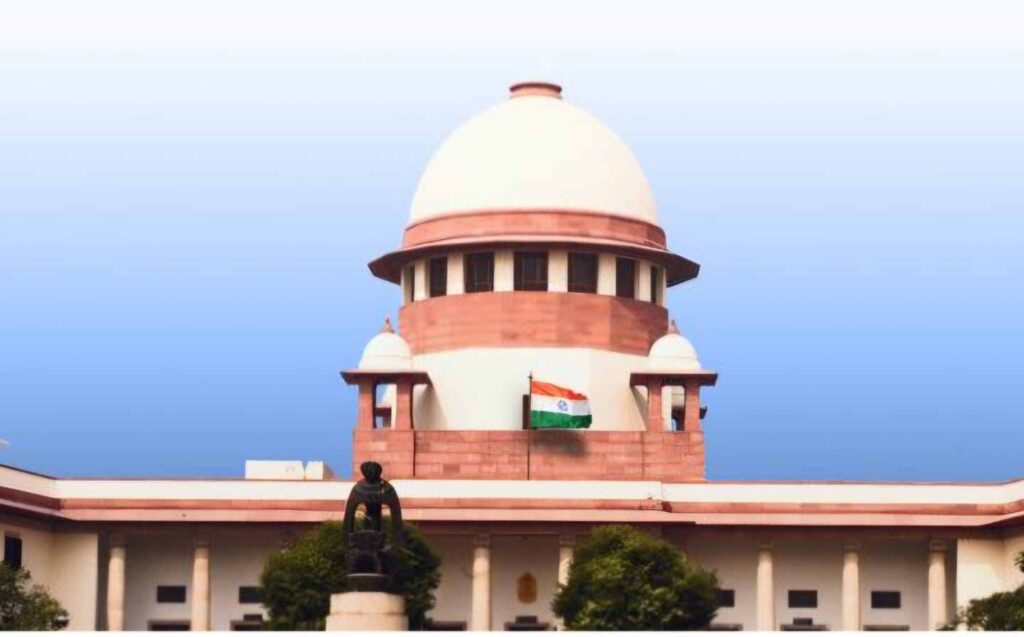
Supreme Court of India
The Court sat with multiple benches; daily cause lists for 21 September 2026 list miscellaneous hearings, fresh admissions, and supplementary lists across courts (e.g., Court No. 2 before Justices Vikram Nath, Augustine George Masih, and Sandeep Mehta; other benches similarly active). No major new reportable judgments uniquely dated exactly today dominate the public digests in the searches, but recent significant decisions (mid-to-late September) remain relevant and widely reported.
Deepak in JC v. State Govt. of NCT Delhi (2026 INSC 1008, judgment around 17 September 2026): The Supreme Court (Justices Prashant Kumar Mishra and N.V. Anjaria) acquitted the appellant of offences under Section 363 IPC and Section 6 of the POCSO Act. It held that reverse-burden/presumption provisions under POCSO do not relieve courts of the duty to scrutinise prosecution evidence or allow mechanical acceptance of an improbable account. Foundational facts must be established first; material contradictions in witness testimony, absence of blood/semen/DNA evidence on clothing, and a plausible defence of false implication arising from a neighbourhood water-sharing dispute led to the acquittal and direction for immediate release (if not required in another case). Multiple legal portals (Verdictum, Indian Kanoon summaries, IntoLegalWorld) corroborate the reasoning and outcome.
Other recent SC matters reflected in digests include clarifications on gratuity liability (setting aside a Bombay HC order that had fastened liability on a principal employer/ONGC for contract workers, holding the Controlling Authority lacked competence to adjudicate the employer-liability issue in that form) and various civil/criminal appeals. Cause lists show ongoing hearings on PILs, SLPs, and connected matters.
HIGH COURTS OF INDIAN STATES
Bombay High Court: Quashed a ≈₹79.72-crore GST demand against Dharma Productions Pvt. Ltd. and related entity. Licensing of copyright in cinematographic films is taxable at 12% (Heading 9973/SAC 997332), not as IT software services at 18% (even if delivered via digital link or hard disk). Mode of delivery does not determine classification; the essential character of the supply controls. Division Bench (Justices M.S. Karnik and Sandesh D. Patil); order widely reported on 20–21 September.
· Jharkhand High Court: Held that a wife’s wish for her husband to live as a “gharjamai” (and her visits to parental home without compulsion) does not constitute cruelty under Section 13(1)(ia) of the Hindu Marriage Act.
· Delhi High Court: Various matters including interim maintenance payable from the date the wife becomes unemployed; criticism of Delhi Police for failure to brief prosecutors timely in bail matters (with direction for DCP appearance in one instance); rejection of certain PILs and brand-ambassador notices; directions on digital-signature token cut-offs. Weekly round-ups cover mid-September activity.
· Madhya Pradesh High Court (weekly digest 14–20 September): Directed fresh appointment process for Additional Public Prosecutor (Mhow Sessions Court); held that a deceased’s statement to media cannot be treated as a dying declaration at the FIR-registration stage; dismissed a PIL seeking appointment of a new Governor (incumbent continues until successor takes charge); no automatic presumption of joint Hindu family merely because brothers inherited property jointly from their father.
· Other notable High Court highlights from recent round-ups: Kerala HC on anticipatory bail in a modesty-outrage case involving advocates and on organ-donation antecedents; Punjab & Haryana HC on marriage after puberty under Muslim law and related custody/prostitution-trafficking distinctions; Gujarat HC on Waqf Board inquiries and Places of Worship Act; Calcutta HC on mutual-consent divorce as ground to quash 498A cases; Chhattisgarh HC on defective permit applications; Patna HC on juvenile bail in a commercial-quantity ganja case with security-probe directions; Rajasthan HC on parole terms reflecting prisoner’s means.
Worldwide legal/court developments (selected)
- Australia High Court: Allowed an appeal concerning detention extension under mental-health/forensic provisions (statutory requirements not met); dismissed another immigration-related appeal on jurisdictional error.
- England & Wales: High Court rejected certain asylum claims by an interfaith Indian couple but allowed claims of unlawful separation in detention (no suitable family accommodation since 2020); Court of Appeal addressed Care Act needs assessment and Mental Capacity Act requirements.
- EU/CJEU-related: General Court upheld prohibition of Booking.com’s acquisition of eTraveli (network effects); other recent activity on data-consent for marketing partners and election-deposit rules.
- United States: Appeals courts rejected certain rapid third-country deportation policies; proposed rules on AI-assisted court filings certification; federal judge vacated a DOE anti-DEI grants policy; ongoing immigration, AI, and regulatory litigation. US Supreme Court activity in this window is lighter on new major merits opinions (earlier term items on birthright citizenship, etc., already decided).
- Other: Armenia Constitutional Court on CIS treaty compliance; various US state/federal receivership and grant cases.