
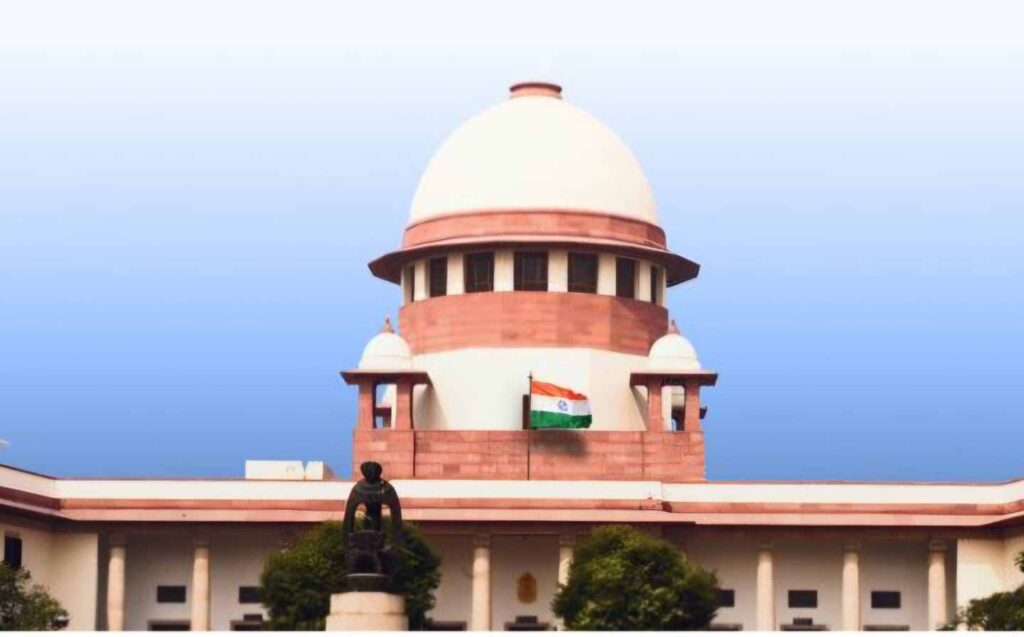
Important Legal Developments
- Supreme Court pauses worship-site surveys. The court has paused ongoing surveys of places of worship, including mosques, while petitions challenging provisions of the Places of Worship Act are heard. The order seeks to prevent further communal tension during pending proceedings. The Sambhal violence and earlier survey-related clashes form the immediate background. The issue remains one of the most sensitive before the court.
- Supreme Court examines voter-roll deletions. The court heard challenges to deletions from electoral rolls and said the legality of “logical discrepancies” in automated scrubbing remains undecided. It suggested that the Election Commission consider extending deadlines for claims and objections in Delhi. The proceedings could affect how electoral rolls are revised across states. The court is balancing administrative efficiency with voter protection.
- Supreme Court rejects beneficial-ownership disclosure plea. The court declined to order SEBI to mandate public disclosure of ultimate owners and portfolios of AIFs, FPIs and intermediaries. It held that no legal framework currently requires such disclosure. The judgment limits judicial directions where the underlying statutory regime is absent. The decision may prompt calls for legislative or regulatory reform.
- Supreme Court questions 100 per cent ethanol blending. The court raised questions about the government’s push for complete ethanol blending in petrol. The hearing indicates judicial interest in the policy’s wider implications. The matter involves agriculture, fuel pricing, environmental impact and energy security. Further proceedings could shape the pace of India’s ethanol transition.
- Bombay High Court rejects Meta’s forum-transfer plea. The High Court refused to transfer a dispute filed by Blink Digital to California. It held that alleged violations of Indian law should be examined by Indian courts. The ruling reinforces the jurisdiction of Indian courts in technology-related disputes. It may influence how global platforms approach litigation arising in India.
- Allahabad High Court grants bail to Azam Khan. The Allahabad High Court granted bail to Samajwadi Party leader Azam Khan in a dual PAN card case. Justice Samit Gopal allowed the bail plea but did not stay the sentence imposed by the Rampur trial court. Khan had been sentenced to 10 years in the matter. The order provides partial relief while the larger legal proceedings continue.
- Media challenge to privacy law reaches Supreme Court. A coalition of 21 news organisations has challenged provisions of the new privacy law, arguing they could obstruct journalism. The petitioners say mandatory consent requirements could function as prior restraint. The government will have to justify the law’s restrictions. The case could become a landmark test for press freedom and digital privacy.
- Supreme Court maintains active listing and special-bench arrangements. The court issued listing notices for oral mentioning matters on 29 and 30 October and notified a special bench arrangement in Court No. 2. It also issued a notice regarding deletion of certain chamber matters. These procedural updates indicate a busy judicial calendar. Litigants and lawyers are tracking urgent listings closely.
- High-court-level criminal and economic cases continue. The Allahabad High Court’s bail order and the Bombay High Court’s jurisdictional ruling show that state high courts remain central to politically and commercially sensitive litigation. Such orders often have immediate consequences for public life and business. Courts are increasingly being asked to balance individual liberty, regulatory authority and commercial interests. Their rulings are shaping the broader legal environment.
- Election-law litigation gains urgency. With the SIR process under judicial scrutiny, election-related petitions are becoming a major area of litigation. Courts are being asked to protect voters from wrongful deletion while allowing electoral authorities to update rolls. The outcome could influence future revision exercises. Political parties are likely to approach courts wherever they believe voters are being excluded.