
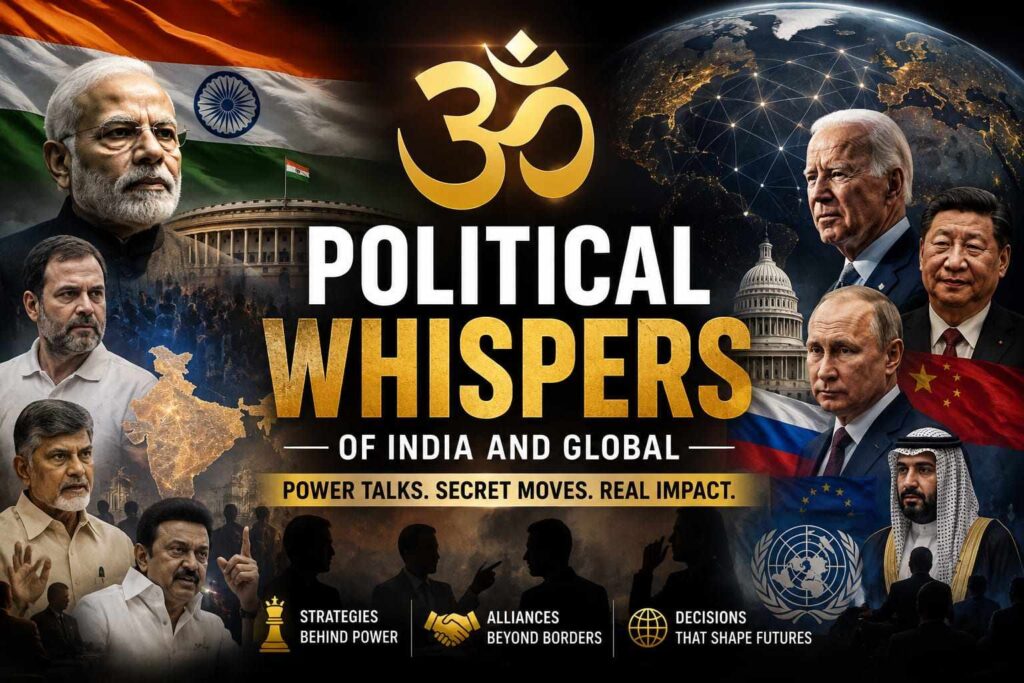
World Political Whispers
- The United States-China technology dispute is becoming a defining issue for global markets and diplomacy.
- Both sides are using export controls, investment screening and industrial policy to gain advantage.
- Companies are preparing for a more fragmented technology ecosystem.
- Allies are being drawn into the competition through supply-chain decisions.
- The outcome could shape global trade and security for years.
- The United States, China and Russia’s peace declaration may be more symbolic than substantive.
- The absence of a concrete arms-control framework limits its immediate impact.
- Still, the meeting signals a willingness among major powers to maintain contact.
- Smaller countries will watch whether the engagement reduces regional tensions.
- The declaration could become a reference point in future diplomacy.
- Mongolia’s political transition could open space for a broader public debate on corruption and governance.
- The President’s resignation follows allegations from political rivals.
- An early election may reshape the balance of power in Ulaanbaatar.
- The country’s strategic location makes the transition important for regional diplomacy.
- Investors and neighbours will watch for continuity in economic policy.
- The United States withdrawal from Iraq may alter the regional balance of influence.
- Iran-backed groups could gain greater space if security arrangements weaken.
- Iraq’s government faces pressure to build credible domestic security capacity.
- The withdrawal may also affect relations between Baghdad, Washington and Tehran.
- The long-term impact will depend on Iraq’s ability to manage competing forces.
- Climate diplomacy is under pressure after the COP31 process failed to deliver expected progress.
- Developing countries are likely to intensify demands for finance and technology transfer.
- Major emitters face growing scrutiny over their commitments.
- The failure may push climate action towards bilateral and regional arrangements.
- The next negotiating cycle will be crucial for restoring trust.
India Political Whispers
- The Congress and Samajwadi Party’s seat-sharing talks in Uttar Pradesh could determine the shape of opposition coordination.
- Congress is seeking around 120 seats, including at least 50 it considers winnable.
- Both parties need to balance local strength with national strategy.
- A failure to agree could weaken the opposition’s prospects.
- The negotiations are being watched as a test of alliance discipline.
- The BJP’s “Maha Padayatra” in Telangana signals a plan to counter opposition messaging on electoral rolls.
- The party wants to project itself as a defender of democratic processes.
- The rally also aims to strengthen organisational presence in the state.
- The Congress and BRS are expected to respond with their own narratives.
- Electoral-roll revision may become a major political issue.
- Chief Minister Revanth Reddy’s attack on the previous BRS government over water rights is aimed at mobilising public sentiment.
- The Congress wants to present itself as a protector of Telangana’s interests.
- The BRS is likely to counter by highlighting its own record on irrigation.
- The dispute could become a major campaign theme.
- Farmers’ concerns will be central to the political messaging.
- The alleged job scam investigation in Andhra Pradesh may become a political flashpoint.
- The ruling party will want to show that it is acting against corruption.
- The opposition may question the timing and scope of the investigation.
- The case could affect public trust in recruitment processes.
- Further revelations could shape the political narrative.
- Punjab’s law-and-order debate is likely to intensify ahead of the next election.
- The Shiromani Akali Dal is positioning itself as a party of business safety and governance.
- The Aam Aadmi Party faces pressure to respond to extortion concerns.
- Traders and investors are seeking clearer assurances.
- The issue could become a major electoral theme in the state.