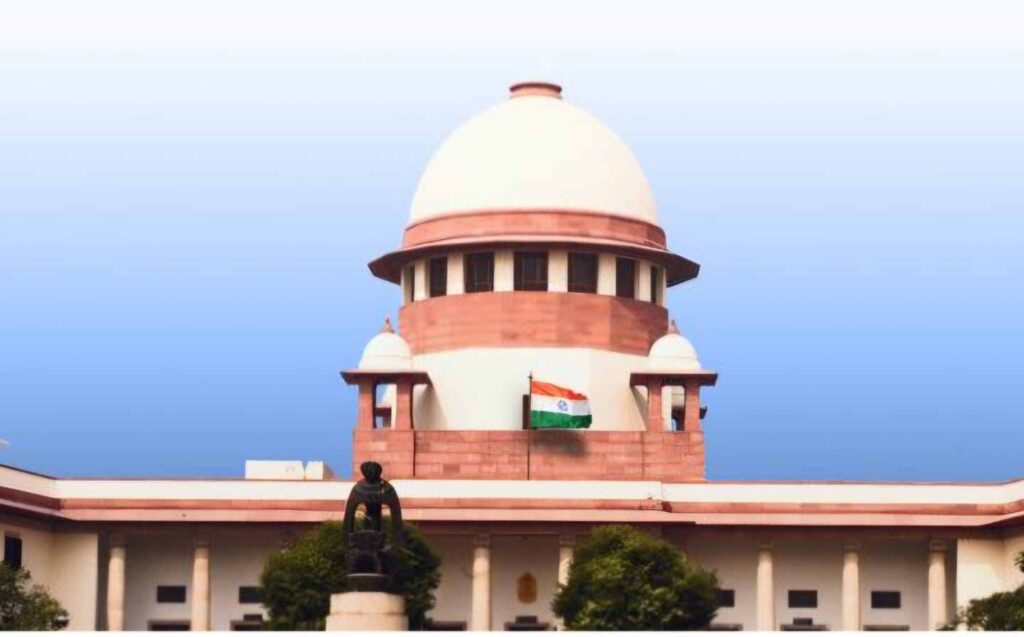
- The Supreme Court quashed all FIRs against student protesters linked to the Cockroach Janta Party between July 20–25, invoking Article 142 to protect their futures, while ordering compensation for families of students who died after the NEET-UG 2026 paper leak.
- The same Bench permitted Delhi Police to file fresh FIRs against 2,873 individuals with serious criminal antecedents present at the protests, but directed that no other protest-related FIRs in any state be pursued.
- A Constitution Bench reiterated that every road must have encroachment-free space for walking, directing urban local bodies to clear footpaths in a time-bound manner, a ruling expected to trigger large-scale demolition drives.
- In a customs-law judgment, the Court set aside a ₹425.28 crore penalty imposed via an AI-assisted order containing hallucinated facts, directing a different officer of the same rank to decide afresh and leaving open disciplinary action against the erring official.
- The Court’s Regulations for Use of Artificial Intelligence in Courts, 2026, came into sharper focus, emphasizing human primacy, transparency and accountability, and permitting AI only for research, citation and summarization under strict human supervision.
- The Supreme Court’s forensic analysis in SBI v. Amit Iron Private Limited clarified the legal test for classifying loan accounts as fraudulent, reinforcing that mere default is not fraud absent specific intent to deceive at the time of borrowing.
- High courts across states began issuing notices in public-interest litigations seeking implementation of the footpath-clearance directive, with several chief justices asking municipal commissioners to file compliance affidavits within weeks.
- The Supreme Court’s latest orders list included special leave petitions in criminal matters from Jharkhand, U.P., Rajasthan and Bihar, reflecting ongoing appellate activity in bail, sentencing and procedural disputes.
- In SLP(Crl) matters, the Court granted leave in cases involving alleged procedural lapses in investigation and trial, signaling continued scrutiny of lower-court processes in serious criminal matters.
- Civil SLPs involving property disputes, service matters and family-law issues were also listed, with the Court emphasizing mediation and settlement where possible to reduce backlog.