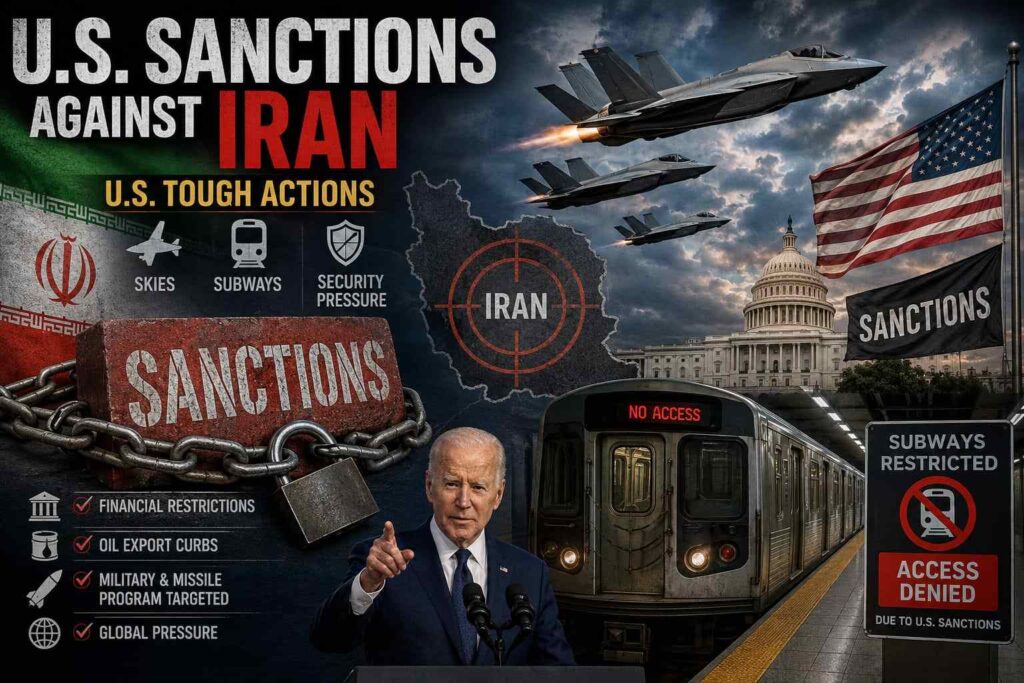
The Strait of Hormuz is open, but the U.S.–Iran confrontation is far from settled. After weeks of military escalation, the contest is moving into a harder and potentially longer phase: sanctions, shipping risk, diplomatic deadlock and pressure on countries that still trade with Tehran. Washington says it will impose the “toughest sanctions in history” on Iran, arguing that intense financial pressure can reduce the need for another major military campaign. Tehran has rejected that logic, dismissing economic threats and insisting that any end to the conflict must be durable, not merely a pause before another round of confrontation.
The immediate test lies at sea. Ship-tracking data recorded only nine commodity-vessel transits through Hormuz on Wednesday, unchanged from the previous day. At the Bab el-Mandeb strait, a second vital maritime gateway, movements fell from 32 to 27 vessels. These are more than shipping numbers: they show how quickly a regional war can translate into higher insurance costs, disrupted energy supplies and uncertainty for global trade.
For India, the stakes are direct. Hormuz is central to energy flows from the Gulf, while any prolonged rise in freight costs or crude prices can feed into inflation, trade balances and household fuel bills. The conflict is also testing regional diplomacy: Qatar and Egypt are still pushing for a sustainable agreement, but negotiations remain without a publicly confirmed breakthrough.
The key fact is therefore not simply that the waterway remains open. It is that it remains open under pressure. The next few days will show whether sanctions and diplomacy can create a genuine settlement—or whether the present calm is only an interval between crises.