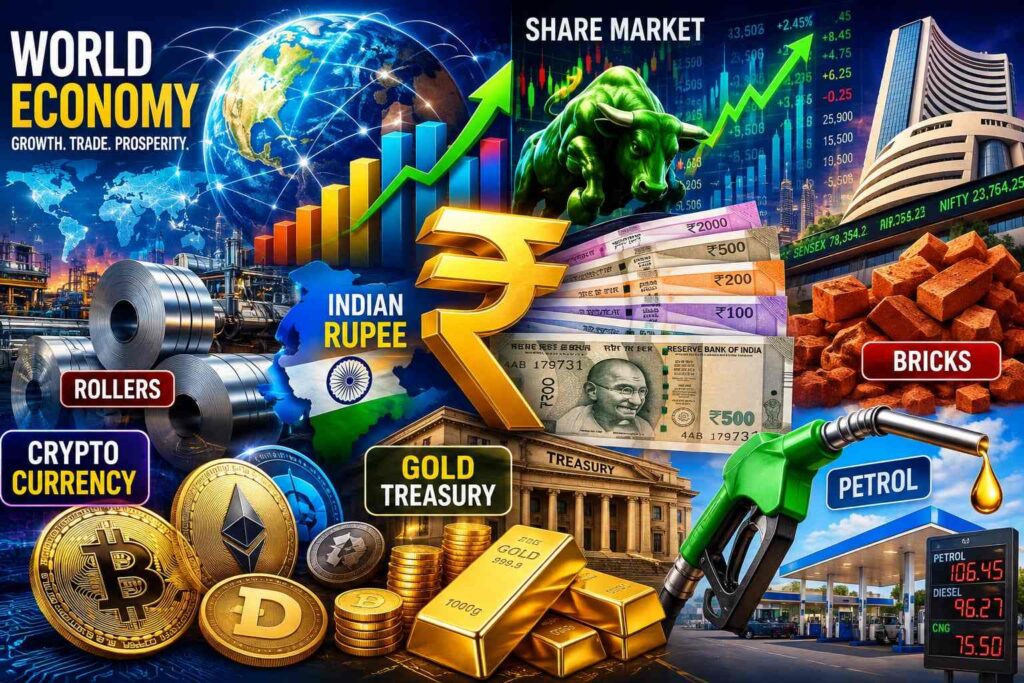
Indian shares were expected to open higher on 23 November, extending a four-week winning streak. Foreign investors continued to buy Indian equities. Easing oil prices and a global sell-off in AI-linked stocks supported the trend. The Nifty 50 had surged nearly 12 per cent during the month. This was against a 10 per cent decline in MSCI’s regional index. The performance reflected a shift of global capital towards Indian markets.
Foreign investors continued to favour Indian equities amid weakness in global technology stocks. The deepening AI rout prompted investors to look for markets seen as relatively insulated. India attracted record foreign inflows into equities worth $12 billion. The flows supported both the rupee and demand for fixed-income assets. The trend marks a reversal after two years of selling by foreign investors. Market participants see the shift as a major positive for Indian assets.
The Indian rupee was expected to extend its gains. Traders expected the currency to open in the 92.60-92.64 range against the dollar. It had closed at 92.67 per dollar on Friday. The rupee strengthened past the psychologically important 93 level for the first time since April. It gained 1.7 per cent during the week. Foreign inflows, lower oil prices and declining US Treasury yields supported the currency.
Lower crude prices remained a positive factor for India’s external position. Oil prices had eased, reducing pressure on the import bill and the rupee. However, officials warned that inflation remained above the Reserve Bank of India’s tolerance band. Oil prices also remain vulnerable to renewed geopolitical tensions. Any fresh spike could affect inflation, corporate margins and the currency. Markets will continue to watch crude closely.
India’s oil and gas import bill rose 60 per cent year on year to $16 billion in October. The increase came as crude prices nearly doubled from a year earlier. The rise adds pressure on the country’s energy security and external payments. LPG consumption fell 12.3 per cent during the period. The fall reflects the impact of supply disruptions on cooking-gas usage. Policymakers will need to monitor energy costs closely.
India’s HSBC Flash PMI for November was scheduled for release on 23 November. The data will offer an early view of private-sector activity. It covers both manufacturing and services. Economists will look for signs of momentum or slowdown in business conditions. The reading could influence market expectations on growth and policy. Investors will watch new orders, employment and output trends.
Global AI-linked stocks continued to face a sell-off. The weakness has led investors to rotate away from technology-heavy markets. Indian equities benefited as funds sought alternative destinations. The shift supported foreign inflows into Indian stocks. It also helped the rupee and government bonds. The trend shows how global technology sentiment can shape emerging-market flows.
Gold prices in India rebounded on 23 November after a sharp weekly fall. The latest available industry benchmark placed 24-carat gold at Rs 1,23,893 per 10 grams. The recovery followed a steep decline in the previous week. Jewellers and investors were watching global cues and currency movements. Gold remains sensitive to dollar strength, interest-rate expectations and geopolitical risk. Volatility in prices is likely to continue.
Indian markets were set for a holiday-shortened week. Equity markets were to remain closed on Tuesday for Prakash Gurpurb Sri Guru Nanak Dev. The shortened week could see sharper moves as investors adjust positions. Foreign flows, crude oil and the rupee remain key drivers. Global economic releases will also influence sentiment. Traders are expected to remain cautious amid global uncertainty.
COP31’s failure to reach a main agreement added uncertainty for energy and climate-related sectors. The breakdown leaves unclear the direction of global policy on fossil fuels. Oil-producing countries resisted stronger commitments on phase-out. Developing countries continue to seek greater climate finance. Companies may face delayed clarity on investment rules and transition timelines. The outcome could affect energy markets and long-term capital allocation.