
.
Supreme Court
1. CAPF deputation contempt case: Registry asked to explain listing irregularity
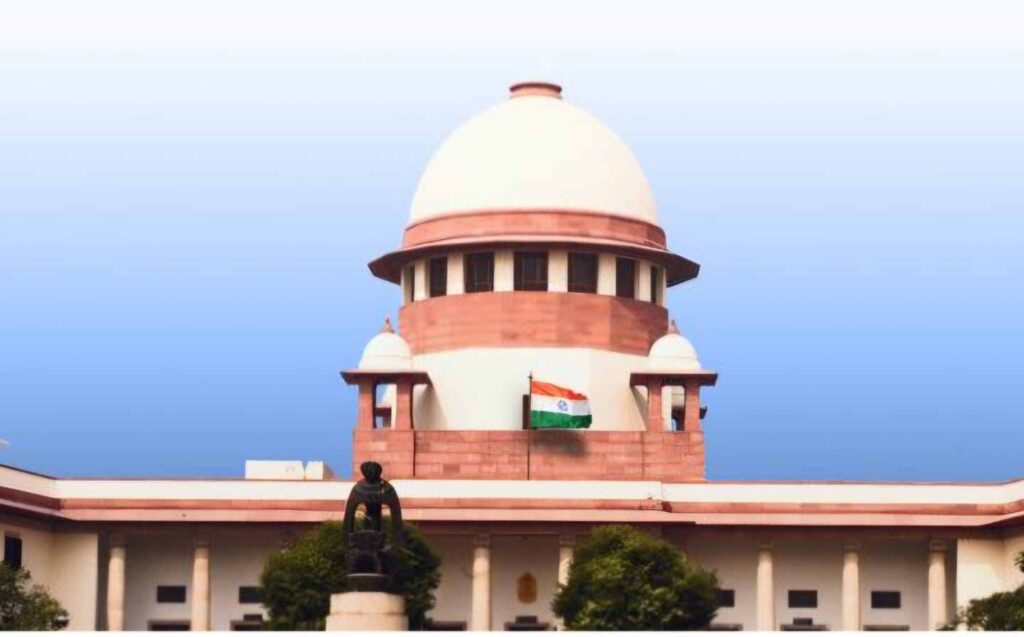
The Supreme Court directed its Registry to explain why contempt petitions filed by serving and retired Central Armed Police Force officers were removed from the cause list despite an earlier judicial direction that they be heard. The matter concerns alleged non-compliance with the Court’s May 23, 2025 judgment, which treated CAPFs as organised Group A services and directed a progressive reduction in the deputation of IPS officers to senior CAPF positions. The petitions were listed before a Special Bench of Justices Manoj Misra and Ujjal Bhuyan.lawchakra+1
Significance:
- The immediate issue is administrative accountability within the Supreme Court Registry.
- The underlying dispute concerns the service structure and leadership of CAPFs.
- The case could clarify how contempt proceedings should proceed when government authorities allegedly fail to implement a binding service-related judgment.
- This is presently a procedural development, not a final ruling on the alleged contempt.
2. Supreme Court website shows fresh case activity
The Supreme Court’s official website recorded matters uploaded on September 30, including State of Kerala v. M/s Kannan Devan Hills and other civil and criminal matters. However, the publicly indexed information does not by itself establish that these entries represent final judgments; some may be orders, listings, or case updates.sci.gov
High Courts
Delhi High Court: Procedure under Section 223 BNSS clarified
A Division Bench of the Delhi High Court held that, under Section 223(1) of the Bharatiya Nagarik Suraksha Sanhita, a Magistrate must generally:
- Examine the complainant and witnesses present on oath.
- Form a prima facie view that the complaint should not be dismissed.
- Issue notice to the proposed accused before formally taking cognizance.
- Give the accused an opportunity of being heard before the formal cognizance decision.
The ruling arose in Dr Rita Bakshi v. Seema Bajaj & Anr., decided on September 29, 2026.lawtrend
Legal importance:
- The judgment places the accused’s opportunity to be heard before formal cognizance.
- It distinguishes between preliminary judicial scrutiny and the formal act of taking cognizance.
- The ruling may affect private complaints and reduce the possibility of criminal proceedings being initiated without preliminary notice.
- The exact application may depend on statutory exceptions and the facts of each case.
Delhi High Court: Bail denied to Umar Khalid and Sharjeel Imam
The Delhi High Court declined to grant bail to activist Umar Khalid and Sharjeel Imam in the alleged larger conspiracy case relating to the February 2020 North-East Delhi riots. The defence relied, among other arguments, on later Supreme Court bail jurisprudence, while the prosecution argued that the renewed bail applications were premature in light of the Supreme Court’s January 2026 ruling.indialegallive
Assessment:
- The order does not determine guilt or innocence.
- It concerns the bail stage and the Court’s assessment of the material and procedural circumstances.
- The decision indicates that the accused remain in custody pending further legal proceedings unless another court grants relief.
- The case continues to have major constitutional and political implications because it involves allegations of conspiracy, protest activity, national security legislation, and personal liberty.
Telangana High Court: Several notable rulings reported on September 29
Available legal reporting identified the following Telangana High Court developments:
- A mother-in-law was held not liable under Section 125 of the CrPC to maintain her widowed daughter-in-law and the daughter-in-law’s children.
- The Court upheld denial of a police job despite an earlier acquittal where the applicant’s past record remained relevant under the circumstances.
- The Court held that a potency test should not be ordered routinely in a rape case involving alleged digital penetration.
- In a GST matter, the Court allowed a taxpayer facing financial hardship to approach the competent authority for revocation of cancellation of GST registration. The authority was directed to consider the application within the prescribed period; the Court did not itself restore the registration.livelaw+2
Broader implications:
- The maintenance ruling distinguishes statutory maintenance obligations from general family relationships.
- The employment ruling shows that acquittal does not automatically erase every adverse antecedent in public-service recruitment.
- The medical-examination ruling emphasises that intrusive tests must have a genuine evidentiary basis and cannot be ordered mechanically.
- The GST ruling offers procedural relief to distressed taxpayers but does not create an automatic right to restoration.
Andhra Pradesh High Court
The Andhra Pradesh High Court’s official circulated-judgment portal showed recent material concerning delays in the disposal of motor accident compensation cases and the possible need for additional benches.aphc
Recent AP High Court reporting has also included these legal principles:
- A mother may seek a family-member certificate after the death of her government-employee son even if he was married.
- A bank may retain pledged gold in circumstances where the petitioner is also connected with another outstanding loan, subject to the applicable contractual and legal conditions.
- A second habeas corpus petition challenging the same preventive-detention order is maintainable only if there is a change in circumstances or a new ground.
- Sanction for prosecution under the Prevention of Corruption Act cannot ordinarily be withdrawn after criminal proceedings have commenced unless fresh material justifies reconsideration.