
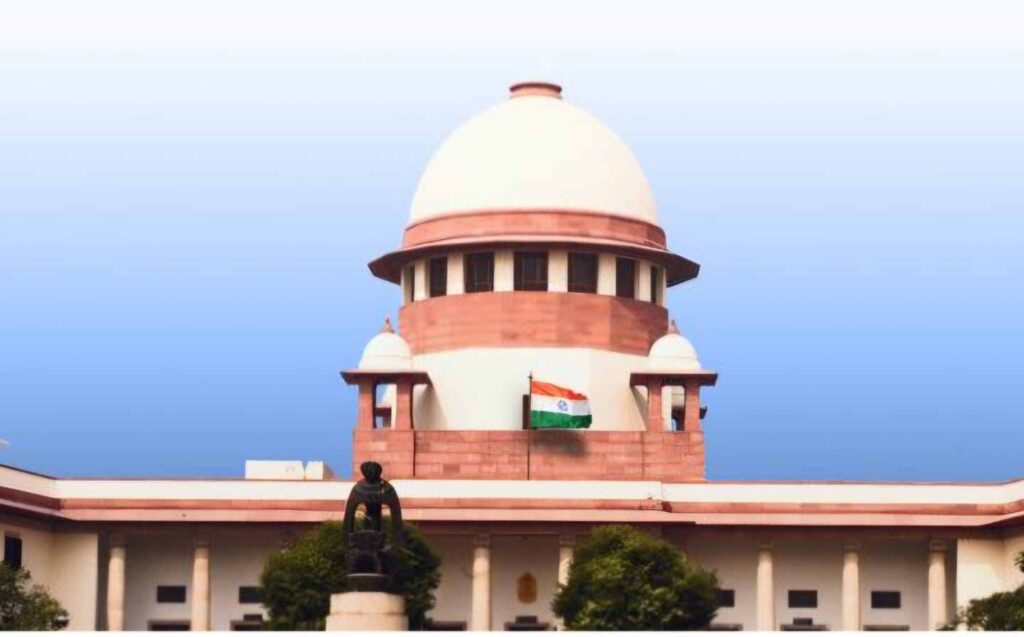
The Supreme Court directed the RBI to ensure genuine compliance with its Fair Practices Code, Master Circulars and recovery-agent guidelines after finding that forcible vehicle seizures continued despite years of regulatory instructions. The judgment arose from the alleged seizure of a truck at about 1 a.m., without the required notice and through the breaking of its steering lock. A Bench of Justices P.S. Narasimha and Alok Aradhe held that lenders cannot use muscle power or recovery agents to dispossess borrowers. The financier was directed to close the two loan accounts, refund ₹4.5 lakh with 6% interest, and pay ₹10 lakh compensation for mental agony and loss of livelihood, besides costs of ₹50,000. Citation: 2026 LiveLaw (SC) 942.
The Court reiterated that repossession clauses must comply with the Indian Contract Act and applicable RBI directions. It also laid down principles concerning notice, lawful possession, recovery-agent supervision, grievance redressal and the final opportunity to repay before sale or auction. The Registry was ordered to send a copy of the judgment to the RBI.
2. Regional Provident Fund Commissioner II v. Ms. Mamta Binani & Ors.
The Supreme Court restored an appeal before the NCLAT after concluding that the delay was caused by a malfunction in the tribunal’s own e-filing system. The appeal had been filed one day beyond the outer 45-day period under Section 61(2) of the Insolvency and Bankruptcy Code. A Bench of Justices Dipankar Datta and Sheel Nagu held that a litigant should not suffer because the court or tribunal was technically unable to receive a bona fide filing.
The Court invoked the principle actus curiae neminem gravabit—an act of the court shall prejudice no one. It distinguished between condoning delay beyond the statutory limit and excluding the period during which the e-filing system was non-functional. The NCLAT order was set aside, the appeal was restored, and the tribunal was directed to examine the matter on merits in accordance with law. Citation: 2026 LiveLaw (SC) 946.
3. Sunita Lahu Panchpande v. The District Collector & Ors.
LiveLaw’s 17 September Supreme Court listings identify a judgment holding that an appointment to a public post contrary to the recruitment advertisement amounts to fraud on the public. The report identifies the case and the broad legal proposition, but the material presently available does not provide enough verified detail about the post, recruitment process, factual background or final operative directions.
Accordingly, I am not adding unverified facts or pretending to provide a fuller case note. The safe report is that the Supreme Court treated deviation from the published recruitment conditions as a matter affecting public administration and public trust, rather than as a minor procedural irregularity. The complete judgment should be consulted before relying on the decision for recruitment or service-law advice.
Matters heard or listed today
These are not necessarily judgments delivered today:
- The Supreme Court was scheduled to hear petitions concerning investigation and trial of sexual-violence cases arising from the Manipur crisis. The cases involve earlier directions transferring trials to Assam under the Gauhati High Court and consideration of exclusive courts for CBI- and NIA-investigated matters.
- The Court was scheduled to hear challenges to the CBSE decision making a third language compulsory for Class 9 students from the 2026–27 academic year.
- A Bench was to continue hearing the premature-release application of Dara Singh, also known as Rabindra Kumar Pal, who is serving a life sentence in the Graham Staines murder case.