
As of Tuesday, 29 September 2026, 12:01 PM IST
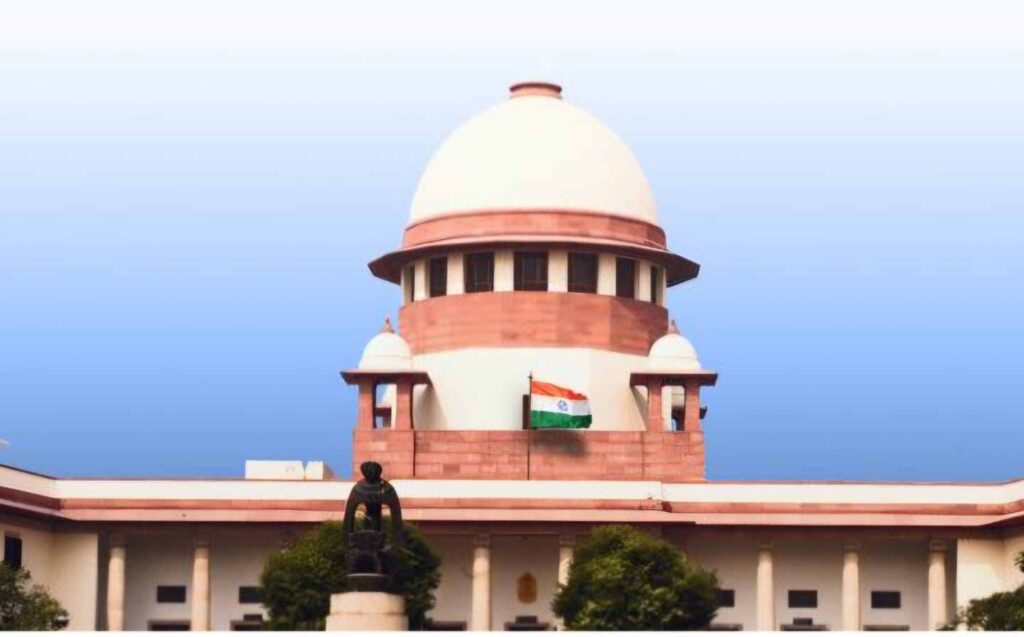
Supreme Court
1. Suo motu proceedings on Delhi-NCR rape cases
The Supreme Court has taken suo motu cognisance of recent rape incidents in the Delhi-NCR region. The Court reportedly described the situation as reflecting a broader failure of policing and administration, stating that merely expressing solidarity is not an adequate response and that accountability must be fixed.
The Court has also sought information regarding Fast Track Courts from the Registrar General of the Delhi High Court and directed steps aimed at making public spaces safer. A safety audit has reportedly been ordered within four weeks. The matter is significant because it moves beyond individual criminal cases and examines systemic responsibilities involving police patrols, lighting, surveillance, emergency response, prosecution and trial infrastructure.livelaw
Legal and policy significance:
- The proceedings may lead to institutional directions applicable not only to Delhi but potentially to other States.
- The focus is likely to be on prevention and administrative accountability, rather than only punishment after an offence.
- The requirement for safety audits could result in scrutiny of poorly lit areas, transport hubs, public toilets, deserted roads and police response systems.
- The practical effect will depend on whether the Court receives measurable compliance reports and fixes responsibility for non-compliance.
The Supreme Court’s official website lists the matter as “In Re: Recent Rape Incidents in Delhi NCR,” SMW (Crl.) No. 6/2026, with the judgment/order uploaded on 29 September 2026.sci
2. One-time payment to daily-wage workers of defunct corporations
The Supreme Court directed Bihar and Jharkhand to pay a one-time amount of ₹1 lakh to each concerned daily-wage employee or workman associated with five defunct State-owned corporations. It also ordered:
- 12% simple interest per annum on delayed Employees’ Provident Fund dues.
- 6% interest on delayed salary, wages and other monetary dues.
The case relates to dues that remained unresolved for approximately 25 years. The order is important because it recognises that prolonged administrative and legal delay can substantially undermine the value of workers’ entitlements.livelaw
Wider implications:
- State-owned corporations cannot indefinitely avoid labour liabilities merely because they have become defunct.
- Long delays in payment may attract significant financial consequences through interest.
- The order may strengthen claims by similarly placed workers in liquidation, closure and restructuring disputes.
- The one-time payment appears to be additional relief, distinct from the original dues already determined or disbursed.
The official Supreme Court listing identifies the matter as Bihar State Ardh Sarkari Arajpati Karamchari Mahasangh v. State of Bihar, W.P. (C) No. 932/2022, with the judgment uploaded on 28 September 2026.sci
3. Other Supreme Court matters listed or uploaded
The Supreme Court website also shows several orders uploaded on 29 September, including matters involving:
- Viswapriya Investors Welfare Association v. P. Sadanand.
- Lovina Cabrol v. Siddharth Bharti.
- Gavara Swarna v. Karthik S.
- Korini Bharathi v. Nethinti Ramakrishna.
- Mukesh Kumar v. M.S.T. Construction.
- In Re: Recent Rape Incidents in Delhi NCR.
- International Asset Reconstruction Co. Pvt. Ltd. v. Jayant Vitamins Ltd.
- SmartCity Kochi Infrastructure Pvt. Ltd. v. Musthafa and Almana International Consultants.
These listings indicate that orders were uploaded or updated, but the publicly extracted listing does not provide sufficient reasoning or operative directions for each case. Therefore, it would be unsafe to describe all of them as major judgments without examining the individual PDF orders.sci
Andhra Pradesh High Court
The official Andhra Pradesh High Court “Judgments Circulated” page available on 29 September does not show a clearly identifiable major judgment delivered within the immediate preceding 24-hour period. Much of the material visible on the page consists of earlier Supreme Court judgments circulated for dissemination among High Courts and subordinate courts.
One significant circulated legal principle concerns compensation under the Motor Vehicles Act. In Shishu Pal @ Shish Ram v. Surjeet, the Supreme Court emphasised:
- The Motor Vehicles Act is beneficial legislation intended to provide just and fair compensation.
- Long pendency reduces the effectiveness of compensation.
- High Courts should consider listing old Motor Accident Claims Tribunal appeals according to their date of institution.
- Tribunals should use summary procedures where appropriate.
- In the death of a homemaker, compensation should recognise the economic value of domestic care.
- The judgment used the expression “Nation Builder” in place of the traditional description “housewife.”aphc
This is important for accident-compensation litigation in Andhra Pradesh because it supports a more realistic valuation of unpaid domestic work and urges faster disposal of compensation claims. However, this particular judgment is dated 11 June 2026, and therefore it should not be presented as a judgment delivered during the last 24 hours.aphc
Telangana High Court
The publicly available Telangana High Court page does not presently provide enough accessible information to verify a major judgment delivered between 28 and 29 September 2026. The search results primarily display administrative notices and older court information rather than a complete, searchable, same-day judgment digest.tshc
Accordingly, no specific Telangana High Court judgment should be reported as a confirmed major development based only on the presently accessible information. A complete review would require the court’s daily judgment/orders database or the individual case PDFs.
Other High Courts
Several significant High Court developments were reported on 29 September:
Kerala High Court
The Kerala High Court reportedly dismissed a transfer petition filed by accused persons in the Shuhaib murder case, who sought transfer of the trial from the Additional Sessions Court-III, Thalassery, to another court.
The Court also reportedly allowed a challenge to a government order restructuring police personnel associations. These matters have administrative and criminal-justice implications, but the full orders should be read before drawing conclusions about their nationwide effect.livelaw
Rajasthan High Court
The Rajasthan High Court reportedly held that the absence of a single voter at the time of polling could not, by itself, be treated as an adverse situation requiring postponement of an election or a re-poll.
The broader principle is that election schedules should not be disturbed without a legally sufficient and materially serious basis. The ruling may be relevant to disputes where isolated polling irregularities are cited to demand re-polling.livelaw
Delhi High Court
The Delhi High Court reportedly held that custodial interrogation is not automatically necessary merely for recovery of stridhan. The Court observed that recovery of such property does not fall within the ordinary domain of a bail court and that the complainant must pursue appropriate legal proceedings.
The reported decision involved anticipatory bail for an 80-year-old accused. The principle does not mean that allegations involving stridhan are legally insignificant; rather, it indicates that custodial interrogation must be justified by case-specific investigative necessity and cannot be demanded automatically.livelaw
Calcutta High Court
The Calcutta High Court reportedly directed a Special Intensive Revision Appellate Tribunal to consider expeditiously an appeal filed by Haj pilgrims whose names had been deleted from the electoral roll.
The reported issue connects electoral-roll revision with the practical ability to obtain passports and visas for pilgrimage. The Court’s approach appears to emphasise timely administrative adjudication where delay could make the requested relief meaningless.livelaw