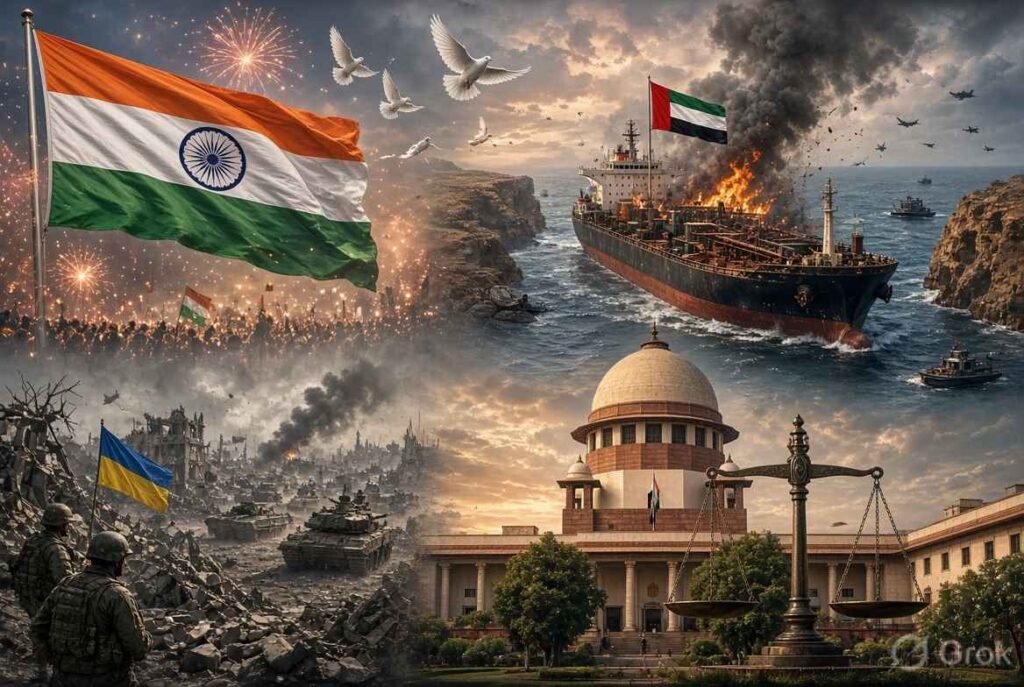
- Iran’s Islamic Revolutionary Guard Corps claimed it struck the Togo-flagged oil tanker Trend as the vessel attempted to transit the Strait of Hormuz. Iranian state media described the action as a response to an “illegal” passage without authorization under Tehran’s asserted control of the waterway. The incident adds to ongoing risks for commercial shipping in the critical energy chokepoint amid the prolonged Iran conflict. Separate reports noted other vessels facing unknown projectiles in the area in recent days.
- A suicide car bombing outside a mosque located inside a police station compound in Kohat District, Khyber Pakhtunkhwa, Pakistan, killed at least 21–27 people, including around 15 policemen, and injured dozens more. The Hafiz Gul Bahadur Group claimed responsibility for the attack, which occurred during Friday prayers. Security forces responded with heightened operations in the region as the insurgency in northwest Pakistan continues.
- A United Nations Independent International Fact-Finding Mission stated there were “reasonable grounds” to believe the United States may have committed war crimes in specific strikes on civilian sites in southern Iran, including a school and a sports hall that killed scores of civilians, many of them children. The same mission indicated Iranian authorities may have committed crimes against humanity. The White House dismissed the findings, while the report intensified legal and diplomatic scrutiny of the conflict.
- Russians began voting in the first multi-day parliamentary elections for the State Duma since the full-scale invasion of Ukraine. The process is taking place under wartime controls, with the anti-war opposition party Yabloko barred from contesting and ongoing restrictions on dissent. Officials framed the vote as a measure of public support for the government’s policies amid continued fighting and infrastructure attacks.
- The Bank of Japan raised its benchmark interest rate by 0.25 percentage points to 1.25 percent, the highest level since 1995. Policymakers cited inflation pressures linked to elevated energy costs and a weak yen, signalling the possibility of further tightening. The move reflects global economic spillovers from the Middle East conflict and related fuel market volatility.
- The United States and Denmark reached an agreement concerning expanded American military presence and security arrangements in Greenland. President Trump described the deal as granting the U.S. significant control over security needs on the island while excluding adversaries. Danish and Greenlandic officials emphasised that sovereignty and the right to self-determination remained intact.
- Saudi Arabia and Yemen’s Iran-aligned Houthi forces exchanged cross-border strikes, with reports of casualties on both sides and at least one civilian death in Saudi Arabia from intercepted drone debris. The United Nations noted that more than 112,000 people had been displaced inside Yemen in recent weeks as fighting intensified. The clashes have raised fresh concerns over Red Sea shipping and regional oil infrastructure.
- Russian missile and drone strikes targeted the Kyiv region and other areas of Ukraine, injuring at least 19 people including children in one barrage and causing further civilian harm elsewhere. Ukrainian forces continued drone operations against Russian oil and energy facilities. European leaders, including France’s President Macron, warned of intensifying Russian hybrid attacks on critical infrastructure across Europe.
- Polish Prime Minister Donald Tusk publicly warned that Russia was preparing “accidental” or hybrid strikes on countries supporting Ukraine, intended to test and potentially paralyse NATO’s Article 5 mutual-defence commitment. Poland also announced it had joined an anti-ballistic missile coalition aimed at developing joint European defence capabilities. The statements underscored growing European anxiety over escalation risks.
- South Korean President Lee Jae Myung stated that Seoul would not deploy troops or major military assets to support U.S. operations in the Iran war, despite pressure from Washington. He indicated that any expanded naval activity by South Korean vessels near Somalia would focus primarily on protecting commercial shipping, particularly oil tankers. The position highlighted limits on allied involvement in the Middle East conflict.
- President Trump indicated he was approaching a critical decision point on whether to intensify or restart major attacks in an effort to conclude the Iran war. He declined to specify whether the choice would come before or after U.S. midterm elections. Separate reporting noted continued Iranian assertions of control over Hormuz shipping and intermittent tanker incidents.
- Warren Buffett stepped down as chairman of Berkshire Hathaway after more than five decades in the role, becoming chairman emeritus at age 96. His son Howard Graham Buffett was designated to succeed him. The transition marks a significant leadership change at one of the world’s largest conglomerates.
- Malaysia’s King Sultan Ibrahim granted former Prime Minister Najib Razak a conditional pardon, allowing him to serve the remainder of his corruption sentence related to the 1MDB scandal under house arrest until August 2028. The decision followed years of legal proceedings and remains subject to political and public debate in the country.
- A school shooting in Banga, southern Philippines, left at least one student dead (with some reports citing three fatalities including the suspected 16-year-old gunman) and several others injured, most of them teenagers. Local authorities confirmed the victims were students aged 14–17. The incident added to a series of recent high-profile school attacks in the country.
- The European Union prepared to disburse approximately €3.3 billion to Ukraine specifically for the purchase of missiles and drones. The funding followed discussions with Ukrainian President Volodymyr Zelenskyy and forms part of continued European military support. Additional European measures focused on countering hybrid threats and reinforcing defence industrial capacity.
- President Trump announced restrictions or bans on certain media outlets, including CNN and Politico, from White House access. The move was framed as a response to coverage the administration regarded as hostile. It prompted immediate reactions from press-freedom advocates and the affected organisations.
- Hundreds of thousands of people participated in a large pro-government rally in Tehran, described as one of the biggest public shows of support for the Iranian leadership since the war began in February. Participants expressed defiance and readiness to defend the country. The gathering occurred amid ongoing military and diplomatic pressures.
- Russian authorities placed local assets of foreign companies including Auchan and Nestlé under temporary administration, transferring control to a domestic firm. The government cited the companies’ origins in countries designated as “unfriendly.” The action forms part of a broader pattern of asset seizures linked to the Ukraine conflict and sanctions environment.
- The U.S. House of Representatives advanced legislation imposing additional sanctions related to Russia and Iran, sending the bill toward the President’s desk. The measure includes provisions that could affect countries purchasing Russian energy. Separately, Russia and China blocked certain U.S. efforts at the United Nations concerning Iran-related oversight.
- Reports indicated continued scrutiny of civil rights and judicial processes in multiple contexts, including a crackdown on LGBTQ expression and related protests in Turkey that led to hundreds of arrests, and ongoing concerns over wartime restrictions on opposition and media in Russia during the Duma elections. Legal developments also included repatriation of bodies between Ukraine and Russia as part of prisoner-related exchanges.