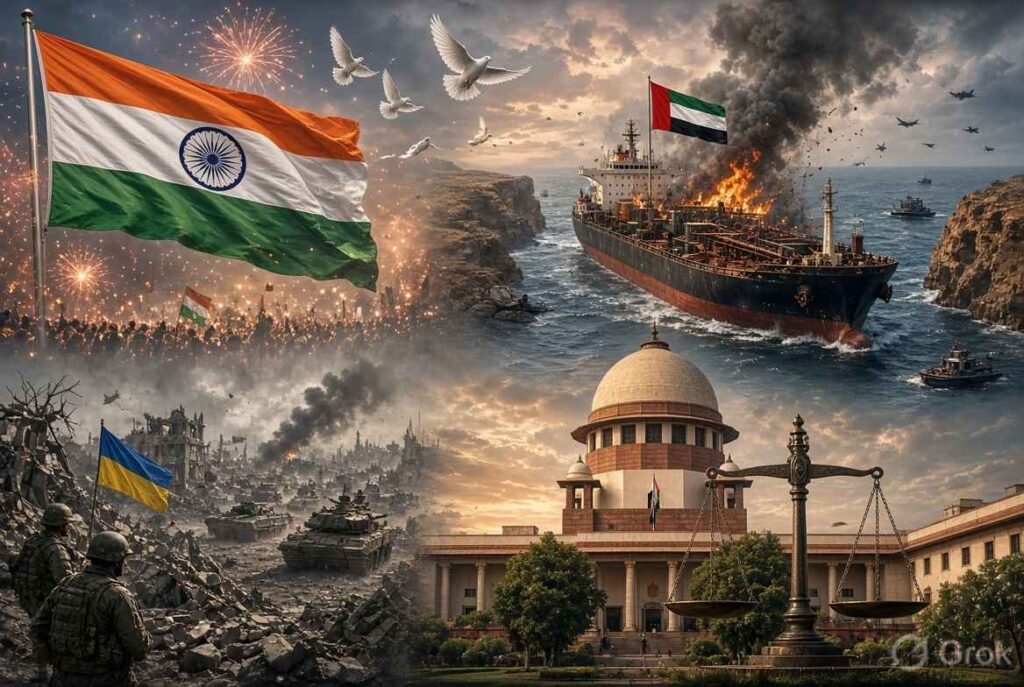
- Middle East tensions intensified sharply. Iran’s supreme leader warned the United States and Israel of fresh attacks after both countries threatened to resume strikes following crucial elections. The statement raised fears of a renewed military confrontation in a region already dealing with shipping attacks and energy-market disruption. Diplomats were watching whether back-channel messages could prevent another round of escalation. The immediate concern was the safety of commercial shipping and civilian populations near conflict zones.
- Two oil tankers carrying Indian crew members were attacked in the Strait of Hormuz. One vessel carrying 27 Indian seafarers was targeted with limpet mines, causing a fire in its engine room. Maritime authorities said the fire was brought under control and there was no environmental impact. India’s shipping minister confirmed that all Indian sailors aboard were safe and uninjured. The incidents added to anxiety over freedom of navigation through one of the world’s most important oil routes.
- Iran claimed that three tankers hit mines in the Hormuz area. The claim came amid a broader pattern of attacks and counter-claims involving regional forces. Saudi Arabia separately said it intercepted a drone, underlining the widening security risk across Gulf airspace and waters. Insurance and freight costs were expected to rise if vessels continued to face attacks. Energy-importing countries, including India, were closely tracking the situation.
- Iran’s security leadership signalled a possible softening in United States messaging. A senior Iranian security figure said Washington had softened its stance in a communication attributed to the US Vice-President. The claim could not be independently confirmed in full, but it suggested that diplomatic contacts may be running alongside military threats. Analysts said the mixed signals reflected an attempt to avoid an uncontrolled escalation. The next few days were seen as important for regional de-escalation.
- Germany witnessed large youth-led protests and clashes with police. Demonstrations described as “Gen Z” protests spread across several German cities on 31 October. Police used water cannon and pepper spray after some protesters threw fireworks, stones and bottles. Several people were injured or detained as authorities tried to restore order. The protests highlighted growing youth anger over economic pressures, housing costs and political disillusionment.
- Global equity markets remained under pressure. United States shares fell after weak earnings from major technology companies revived doubts about whether heavy investment in artificial intelligence would deliver returns. Futures pointed to further losses, and Asian markets followed the negative lead. Technology-heavy markets saw the sharpest declines. Investors shifted towards safer assets as risk appetite weakened.
- Oil prices surged to a five-month high. Brent crude touched 117.84 dollars a barrel amid fears of supply disruption following attacks linked to Yemen’s Iran-aligned Houthis and tensions around Hormuz. The rise threatened to push up transport, manufacturing and household energy costs worldwide. Oil-importing economies faced particular pressure because higher crude prices worsen trade balances and inflation. Traders warned that any further shipping disruption could send prices higher.
- United States Treasury yields fell sharply. The decline in yields reflected a flight towards safer government bonds as investors worried about global conflict and weak corporate earnings. Lower yields normally support currencies and borrowing costs, but the benefit was limited by the simultaneous rise in oil prices. Markets were balancing recession fears against inflation risks. Central banks faced a difficult choice between supporting growth and controlling prices.
- The US dollar’s retreat offered some relief to emerging markets. A weaker dollar generally reduces repayment pressure on countries and companies with dollar-denominated debt. However, analysts cautioned that the relief could be temporary if geopolitical risks continue to lift oil prices. Emerging-market currencies remained vulnerable to sudden capital outflows. India was among the economies watching currency and energy movements closely.
- Global shipping security became a central economic risk. Repeated attacks on commercial vessels in the Gulf raised concerns about war-risk insurance, cargo delays and rerouting. Shipping companies were assessing whether to continue transiting the Strait of Hormuz or take longer, costlier alternative routes. Any sustained disruption could affect crude oil, liquefied natural gas and container trade. Import-dependent economies were likely to feel the impact first.
- Political instability continued to shape global market sentiment. Investors were tracking not only military risks but also election-related uncertainty and public protests in several countries. The combination of geopolitical tension, inflation and weak technology earnings made markets cautious. Analysts said volatility could remain high until there was clarity on energy supplies and interest-rate policy. Governments were urged to prepare contingency plans for fuel and food prices.
- Artificial-intelligence investment came under fresh scrutiny. Disappointing results from major technology firms led investors to question whether enormous spending on data centres, chips and AI infrastructure would generate proportionate profits. The concern hit shares of companies closely tied to the AI supply chain. Some analysts argued that the sector’s long-term potential remained intact despite short-term disappointment. Others warned that valuations had run ahead of earnings evidence.
- European authorities faced growing pressure to manage public unrest. The German clashes followed a wider pattern of youth-led demonstrations across parts of Europe. Governments were being urged to address the underlying economic grievances rather than rely only on policing. Political parties were likely to respond with promises on jobs, rent, education and climate policy. The protests could influence electoral politics in the coming months.
- Global energy security returned to the top of the policy agenda. The Hormuz incidents reminded governments that a narrow maritime corridor can affect global fuel supply within hours. Energy ministries and central banks were assessing strategic reserves, import diversification and emergency measures. India, Japan, South Korea and European economies were particularly exposed. The episode was likely to accelerate discussions on alternative supply routes and renewable energy.
- Humanitarian concerns rose in conflict-affected regions. Renewed threats of strikes and attacks increased fears for civilians already affected by conflict and displacement. Aid agencies warned that escalation could disrupt relief supplies, hospitals and essential services. International organisations called for protection of civilians and unimpeded humanitarian access. The situation remained fluid, with diplomatic efforts continuing behind closed doors.
- Global inflation risks strengthened. Higher oil prices, disrupted shipping and weaker currencies threatened to feed into consumer prices across economies. Food and fuel were the most immediate channels of transmission. Central banks in emerging markets faced pressure to keep interest rates higher for longer. The risk was especially serious for countries already dealing with elevated food inflation.
- Investors increased their focus on safe-haven assets. Gold, government bonds and select defensive currencies attracted attention as geopolitical risks rose. However, bond yields did not fall uniformly, reflecting competing concerns about inflation. Market participants said hedging costs were likely to rise. Companies with global supply chains were advised to review exposure to Gulf shipping routes.
- The global economic outlook became more uncertain. Strong trade in some sectors was being offset by energy shocks, financial-market weakness and geopolitical risk. Manufacturing and services data remained resilient in several economies, but business confidence was fragile. Policymakers were concerned that a prolonged energy crisis could undermine growth. The coming weeks were expected to test the durability of the global recovery.
- International attention turned to maritime law and accountability. Attacks on commercial vessels raised questions about responsibility, evidence and enforcement under international maritime rules. Governments and shipping bodies were seeking clearer mechanisms to protect crews and vessels. India’s confirmation that its seafarers were safe reduced immediate humanitarian concern, but the wider threat remained. Maritime security cooperation was expected to intensify.
- Global leaders faced a widening gap between diplomatic rhetoric and ground reality. While officials spoke of de-escalation, attacks and military warnings continued. The disconnect kept markets, airlines, shipping firms and households uncertain. Analysts said credible communication and verifiable steps would be needed to calm tensions. Until then, the risk of miscalculation remained high.