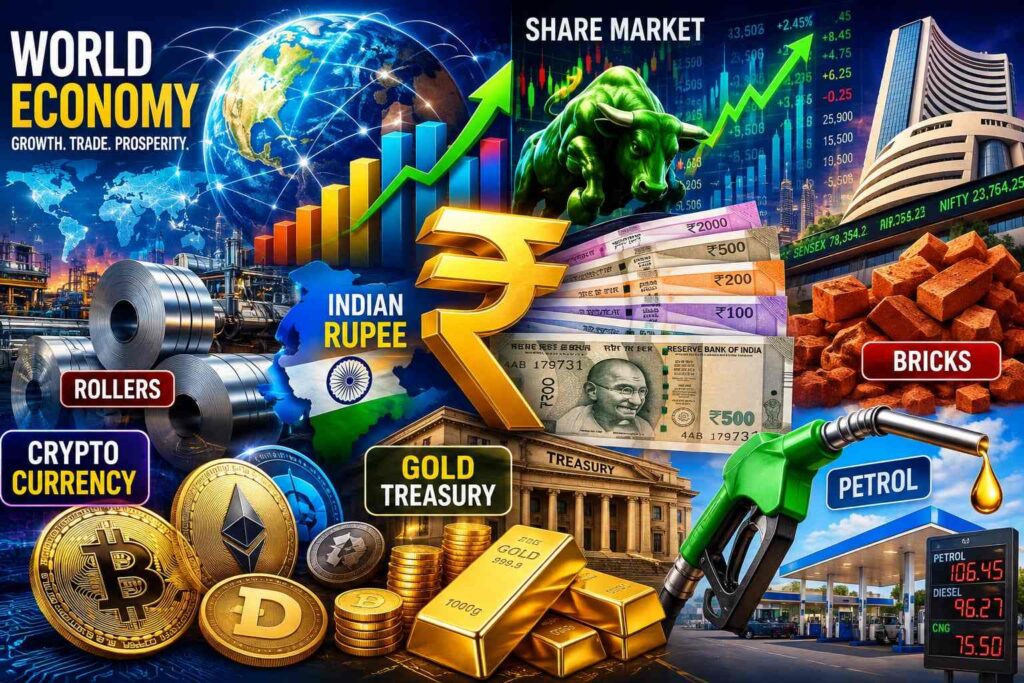
- The rupee closed at 94.95 per dollar. It strengthened from 95.26 in the previous session, helped by measures to curb dollar demand and a retreat in the US currency. The rupee posted its best month in eight. Traders said support could be limited if oil prices continued rising. The Reserve Bank was expected to intervene to prevent disorderly movement.
- Brent crude touched 117.84 dollars a barrel. The surge followed renewed attacks and supply-disruption fears around the Strait of Hormuz. Higher crude prices increase India’s import bill and can worsen inflation. Transport, aviation, chemicals and manufacturing were among the sectors most exposed. Policymakers were watching whether prices would remain elevated.
- India’s retail inflation rose to 5.5 percent in September. It increased from 4.8 percent in August, driven largely by food prices and unfavourable base effects. Core inflation edged up to 4.3 percent from 4.1 percent. The reading brought inflation closer to the Reserve Bank’s upper tolerance limit of 6 percent. Economists warned that energy prices could add further pressure.
- Wholesale inflation jumped to 11.4 percent in September. It was the highest level under the 2022-23 base series, up from 9.9 percent in August. Food, fuel and manufactured products all saw stronger price increases. Fuel and power inflation rose to 25.9 percent. Crude petroleum and natural gas inflation surged to 57.3 percent.
- The Reserve Bank raised the repo rate by 25 basis points to 5.50 percent. The monetary policy committee voted unanimously for the increase in its October review. It was the first rate hike since February 2023. The move signalled a shift towards tighter policy amid inflation risks. Further increases were possible if price pressures persisted.
- India’s industrial production grew 6.7 percent in September. The pace was lower than the revised 7.8 percent growth in August. Manufacturing output rose 7.6 percent. The data showed continued industrial momentum, though higher costs could affect future expansion. Policymakers were monitoring investment demand and export orders.
- India’s manufacturing PMI improved to 55.1 in October. The final HSBC reading was higher than September’s 54.7. The composite PMI stood at 55.9, while services activity was at 55.2. All readings remained well above the 50 mark that separates expansion from contraction. The data pointed to resilient domestic demand.
- India’s merchandise exports grew 23 percent in September. Electronic goods, engineering goods and petroleum products drove the growth. The performance was close to the four-year-high export growth of 26.1 percent in August. Strong exports helped offset some pressure from expensive oil imports. Businesses were nevertheless concerned about global demand and shipping risks.
- Oil imports grew 30.8 percent in September. The rise from 25.8 percent in August reflected higher global crude prices and sustained domestic demand. The increase put pressure on the trade balance and the rupee. Energy security became a bigger policy priority. Government measures to manage fuel costs were likely to be scrutinised.
- India’s foreign exchange reserves stood at 721.02 billion dollars. The reserves offered a buffer against external shocks and currency volatility. They gave the central bank space to manage sharp rupee movements. However, prolonged high oil prices and global risk aversion could test the cushion. Market participants were watching weekly reserve data closely.
- Bank credit growth remained strong at 19.4 percent. Deposit growth was 17.8 percent, showing continued demand for loans. Strong credit supports investment and consumption. The gap between credit and deposit growth requires careful liquidity management. Banks were expected to monitor asset quality as interest rates rise.
- The central government’s fiscal deficit widened in September. The budget value was reported at minus 7.10 lakh crore rupees, compared with minus 6.80 lakh crore rupees previously. Higher spending and revenue pressures contributed to the gap. The government faced a difficult balance between welfare commitments and fiscal discipline. Energy-price shocks could increase subsidy and import-related pressure.
- Global technology shares weakened on AI investment concerns. Poor earnings from major technology companies revived doubts about returns on massive AI spending. US equity indexes fell, and Asian markets followed. Technology-heavy markets saw the biggest declines. The selloff showed that investors were becoming more selective about AI-related valuations.
- Global investors moved towards safer assets. Falling US Treasury yields reflected demand for government bonds amid geopolitical risk. Gold and defensive assets also attracted attention. However, inflation concerns limited the scope for a sustained bond rally. Volatility was expected to remain high.
- Corporate India faced rising input costs. Higher crude, fuel, freight and imported raw-material costs could squeeze margins. Companies with strong pricing power were better placed to pass on costs. Small manufacturers and transport operators faced greater pressure. Analysts said earnings guidance would be closely watched in the coming quarter.
- Foreign investor sentiment remained cautious. Global risk aversion, currency pressure and geopolitical uncertainty made investors selective. India’s strong domestic growth and resilient corporate earnings remained supportive factors. But expensive oil and a weaker rupee could affect flows. Market participants were watching policy stability and inflation data.
- Energy-intensive industries faced a difficult operating environment. Cement, steel, chemicals, airlines and logistics companies were exposed to higher fuel and power costs. Some firms could raise prices, but demand elasticity would decide how much cost could be passed on. Government intervention on fuel taxes or subsidies remained a possibility. The outlook depended heavily on Middle East developments.
- The rupee’s improvement offered limited comfort to importers. While the currency strengthened against the dollar, the oil-price surge offset much of the benefit. Importers of crude, electronics and machinery still faced higher landed costs. Exporters could benefit from a competitive currency, but global demand uncertainty remained. Hedging costs were likely to rise.
- Inflation remained the biggest near-term economic risk. Retail inflation was approaching the Reserve Bank’s upper limit, while wholesale inflation was in double digits. Food supply, energy prices and currency movement would determine the next readings. Households were likely to feel pressure through food, fuel and transport costs. Policymakers had limited room to ignore price stability.