
1. NSE Co-Location Scam: Chitra Ramkrishna Prosecution Under PC Act
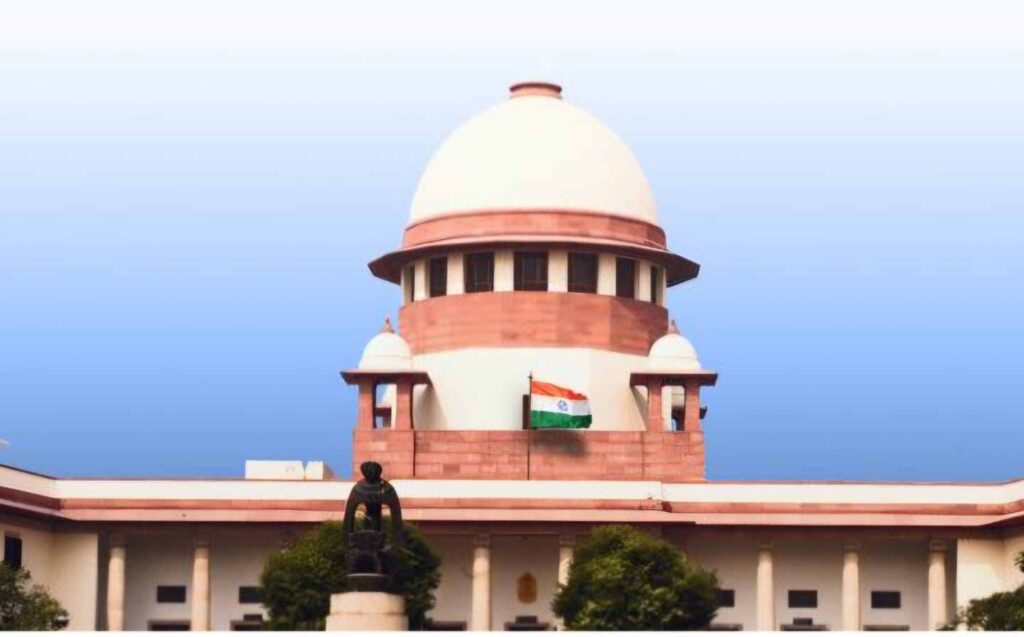
The Supreme Court refused to interfere with the Delhi High Court’s order holding that the National Stock Exchange (NSE) performs a vital economic function in public interest, making its officers “public servants” under the Prevention of Corruption Act. A Bench comprising Justice JB Pardiwala and Justice K Vinod Chandran dismissed former NSE MD & CEO Chitra Ramkrishna’s challenge, observing that whether she was discharging a “public duty” is a matter of evidence to be decided by the Trial Court. The Court noted that NSE’s functions affect the public at large, and thus its officials can be prosecuted under the PC Act.livelaw+3
2. APAAR Student Data Privacy Safeguards (July 20 Order Reiterated)
Although the main order was passed on July 20, 2026, today’s coverage reaffirmed that the Supreme Court in Abhishek Baxi & Ors. v. Union of India & Ors. directed that parents must have an explicit option to refuse consent for the APAAR (Automated Permanent Academic Account Registry) scheme. The Court clarified that APAAR data must comply with the Digital Personal Data Protection Act, 2023, and cannot be shared with private entities except as permitted by law. The scheme was not struck down, but strong purpose-limitation and voluntary-consent safeguards were imposed.asiaiplaw
3. Saminathan v. State (2026) – Contractual Money Recovery Not Criminal Breach of Trust
The Supreme Court held that mere failure to return contractual money, without the essential elements of entrustment and dishonest misappropriation, does not constitute criminal breach of trust. This order clarified the distinction between civil contractual disputes and criminal liability under the IPC.instagram
Telangana High Court – Key Orders (September 15, 2026)
1. HYDRAA Commissioner Removal Order Enforced
A Division Bench of the Telangana High Court (Justices Moushumi Bhattacharya and Renuka Yara) reiterated its earlier order directing the State Government to remove HYDRAA Commissioner A.V. Ranganath for repeated violations of court directions. The Court noted that the Commissioner had failed to comply with previous orders regarding unauthorized constructions in Hyderabad, and the State’s delay in implementing the removal was viewed seriously. The judgment emphasized that court orders must be obeyed without evasion, and administrative convenience cannot override judicial authority.deccanchronicle+1
2. Tax Demand Stay: 20% Pre-Deposit Condition Set Aside
In M/s. VSAIPPL-SMC(JV) v. The Income Tax Officer, a Division Bench (Justices P. Sam Koshy and Vakiti Ramakrishna Reddy) set aside orders that mechanically imposed a 20% pre-deposit condition for staying recovery of outstanding tax demands. The Court held that authorities must exercise independent discretion based on the facts of each case and cannot apply a blanket 20% rule. This order applies to Assessment Years 2022-23, 2023-24, and 2024-25, and reinforces that stay conditions must be reasonable and fact-specific.livelawbiz
3. Trademark Dispute: No Monopoly Over Religious Names
The Telangana High Court ruled that no business can claim exclusive trademark rights over religious or divine names. Dismissing a case by Sai Silks (Kalamandir) Ltd., the Court held that sacred names like “Vara Mahalakshmi” are common trade terms in composite labels and cannot be monopolized. The judgment clarified that dissimilarities between marks (e.g., “Vara Mahalakshmi” vs. “Varahi Lakshmi”) were sufficient to prevent customer confusion, and divine references cannot be corporate property.theprint
Other High Courts – Notable Orders (September 15, 2026)
1. Punjab & Haryana High Court – Section 147A Income Tax Amendment Struck Down
The Punjab & Haryana High Court held that the retrospective amendment authorizing Junior Account Officers (JAOs) to issue reassessment notices under Section 147A of the Income Tax Act was unconstitutional. The Court ruled that the legislature cannot override judicial decisions through retrospective amendments, striking down Section 147A. This aligns with the Supreme Court’s April 2026 direction that taxpayers could challenge the constitutional validity of amended provisions before jurisdictional High Courts.kpmg
2. Delhi High Court – Mediation Drive “For Nation 3.0”
The Delhi High Court issued rules and orders for a nationwide mediation drive scheduled for September 15, 2026, aimed at settling pending cases in all District Courts and High Courts through mediation. The initiative, titled “Mediation for Nation 3.0,” was coordinated with the Supreme Court’s directive to reduce pendency and promote alternative dispute resolution.