Andhra Pradesh News Highlights
- Re-polling was ordered in 13 polling stations across seven urban local bodies in Andhra Pradesh after the State Election Commission found evidence of booth capture. The fresh polls covered areas in Kadapa, Anantapur, Pulivendula and other locations. The order followed complaints and evidence from the urban local body elections held on November 1.
- Four polling stations in Pulivendula municipality were ordered to go in for fresh polling. The State Election Commission concluded that booths had been captured during the original vote. The decision became a major political flashpoint between the ruling coalition and the YSRCP.
- Re-polling was also ordered in one station each in Anantapur, Kadapa and Tirupati municipal corporations. Fresh polls were held in selected stations in Macherla, Jammalamadugu and Chimakurthy municipalities. The commission’s action signalled that irregularities were found across more than one region.
- YSRCP chief Y. S. Jagan Mohan Reddy alleged widespread rigging during the urban local body polls. He claimed that voters were blocked at polling stations, women voters were threatened and voter slips were forcibly taken away. The party demanded action against those responsible.
- The allegations were directed mainly at supporters of the Telugu Desam Party-led coalition government. The ruling side rejected the charge of systematic rigging. The episode is likely to sharpen the political contest ahead of future local and state-level electoral battles.
- The re-polling decision put the State Election Commission at the centre of Andhra politics. Its finding that booth capture had occurred gave the opposition a strong talking point. It also raised questions about polling arrangements and security deployment in sensitive booths.
- Andhra Pradesh Formation Day became politically contentious. Chief Minister N. Chandrababu Naidu did not acknowledge November 1 greetings from national leaders. His ally, Pawan Kalyan, also stayed away from Formation Day celebrations.
- The muted observance of Formation Day reflected continuing sensitivity over the state’s identity and the legacy of bifurcation. Political parties used the occasion to press competing narratives about Telugu pride, statehood and regional grievances. The issue is expected to resurface in future political campaigns.
- Severe Cyclonic Storm Murasu moved towards the south Andhra Pradesh coast. Heavy rainfall affected neighbouring northern Tamil Nadu, while coastal Andhra districts braced for strong winds and flooding. Officials activated preparedness measures in vulnerable areas.
- The cyclone threat shifted attention to disaster management in coastal Andhra. Fisherfolk, low-lying settlements and port-related activity faced possible disruption. Relief and evacuation arrangements were expected to be tested if the storm intensified near landfall.
- The urban local body election violence and re-polling order could influence the state’s broader political climate. The ruling coalition will seek to contain the damage, while the YSRCP will try to convert allegations of rigging into a wider campaign issue. Both sides are likely to approach the Election Commission and courts with competing claims.
- Kadapa and Pulivendula, politically significant because of the YSR family’s influence, remained focal points of the controversy. Fresh polling there drew particular attention. Any result from the re-poll could be projected by parties as a test of public mood.
- The state government faced the twin challenge of maintaining law and order during polls and responding to the cyclone. Administrative coordination between the police, revenue officials and disaster-response agencies became crucial. The coming days will show how effectively local administration handles both crises.
- Andhra’s political discourse remained dominated by electoral credibility, regional identity and governance delivery. The re-polling controversy gave the opposition a fresh line of attack. The ruling coalition, meanwhile, will focus on development messaging and cyclone response.
- The state’s coastal districts remained on alert as weather agencies tracked Cyclone Murasu. The administration’s priority was to prevent loss of life and minimise damage to power, road and communication networks. Fishermen were advised to avoid venturing into the sea.
Telangana News Highlights
- Union Home Minister Amit Shah offered prayers at the Bhagya Laxmi temple near Charminar in Hyderabad ahead of a planned padayatra in the city. Union Coal Minister G. Kishan Reddy and Telangana BJP president N. Ramchander Rao accompanied him. The visit signalled the BJP’s effort to expand its religious and political outreach in Hyderabad.
- Amit Shah’s Hyderabad padayatra was seen as part of the BJP’s attempt to strengthen its organisational presence in Telangana. The party is seeking to position itself as an alternative to both the ruling Congress and the BRS. The temple visit also carried clear symbolic messaging ahead of the political programme.
- Chief Minister A. Revanth Reddy continued his sharp attack on BRS president and former chief minister K. Chandrashekar Rao over the Miyapur land issue. He alleged that KCR, his associate Damodar Rao and businessman Goldstone Prasad attempted to grab government land. The BRS has denied the allegations.
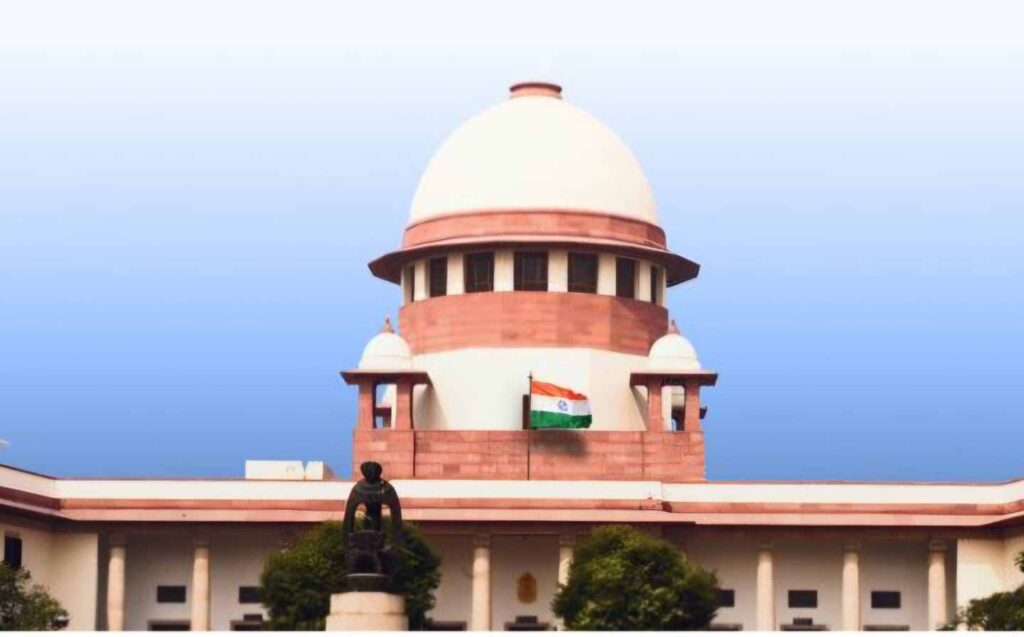
- The attack followed a Supreme Court verdict upholding the Telangana government’s ownership of more than 550 acres of prime Miyapur land. Revanth Reddy described the ruling as historic and said the land, valued at around Rs 50,000 crore, would remain a public asset. He directed officials to protect and fence the property.
- Revanth Reddy claimed that his government had protected government lands worth Rs 1.5 lakh crore over three years. He cited cases in Kancha Gachibowli, Mamidipally, Hayathnagar, Manchirevula, Bhupalpally and Kothagudem. He alleged that the previous BRS government had misused revenue records and the Dharani portal to favour land grabbers.
- The Chief Minister said the Miyapur land could be monetised after a Cabinet decision. He proposed using the proceeds for education, welfare of the poor, tribals and Dalits, and completion of irrigation projects. A Cabinet sub-committee on resource mobilisation was tasked with examining the proposal.
- Revanth Reddy challenged KCR and BRS working president K. T. Rama Rao to debate land-related allegations in the Assembly. He accused the BRS leadership of avoiding a discussion despite the Supreme Court verdict. The BRS, in turn, has accused the Congress government of political vendetta and misuse of institutions.
- The Miyapur controversy is likely to remain a central theme in Telangana politics. For the Congress, it offers a governance and corruption narrative against the previous BRS regime. For the BRS, the challenge is to counter the allegations without appearing defensive on land issues.
- Revanth Reddy also accused the BJP of plotting to win Telangana through the Special Intensive Revision of electoral rolls. His remarks placed the state Congress firmly within the national opposition’s campaign on voter-roll revisions. The charge is expected to feature in upcoming political meetings.
- Telangana’s political competition is increasingly three-cornered, involving the Congress, BRS and BJP. The Congress is using land protection and welfare claims; the BRS is highlighting alleged failures of the current government; and the BJP is using national leadership, Hindutva outreach and organisational expansion.
- Hyderabad’s economic positioning remained a key Congress message. Revanth Reddy projected Telangana as a leader in deep tech, pharma, life sciences, aerospace, defence, manufacturing and energy. He reiterated the “Telangana Rising 2047” goal of a $1 trillion economy by 2034 and $3 trillion by 2047.
- The Chief Minister also spoke of transforming Telangana into the textile capital of South Asia. He promised better infrastructure, land, power, water and faster execution for industry. The message was aimed at investors as well as voters in textile-producing regions.
- The state government’s land policy is becoming a major political and fiscal issue. Revanth Reddy argued that protecting and monetising government land could fund public services. Critics are likely to question valuation, transparency and the social impact of land sales.
- The BJP’s Hyderabad outreach and the Congress-BRS confrontation over land set the stage for a heated political season. Religious symbolism, land ownership, electoral rolls and industrial investment are likely to dominate Telangana’s political conversation in the coming weeks.