

world @ goooglenews.com

By. B.V. Phani Kumar
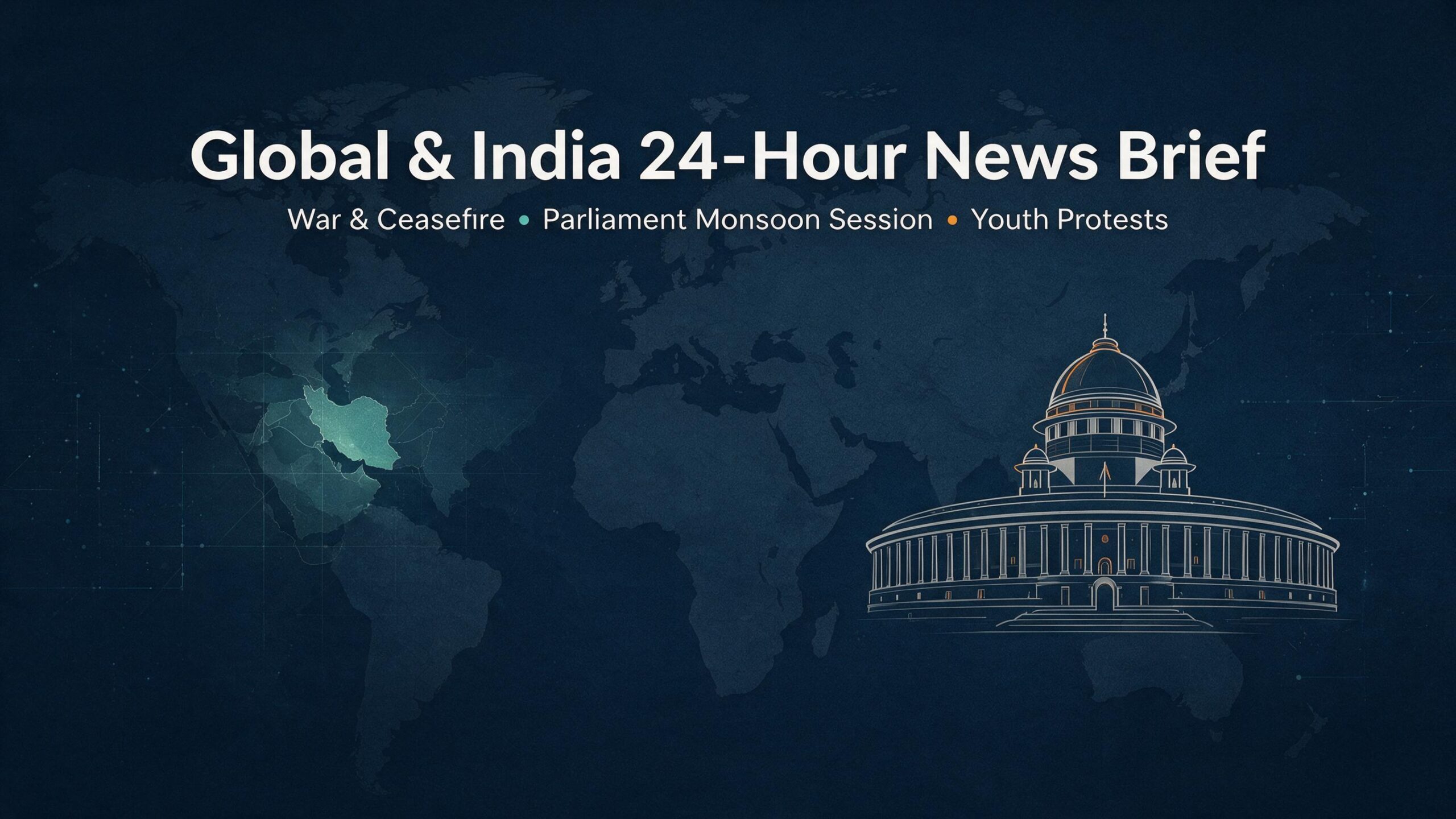
Here are the top trending highlights for the past 24 hours, centered on 21–22 April 2026, with a strong focus on the US–Iran conflict, global safety, legal action, terror alerts,
Global highlights
1) US–Iran ceasefire remains the world’s lead story
Iran signaled it has “new cards” if fighting resumes, while the status of wider peace talks remains unclear, showing that the ceasefire is holding but still politically brittle. President Donald Trump is reported to have extended the ceasefire window while pressing for a more permanent proposal, which keeps diplomacy alive even as mutual distrust remains high.
2) New US sanctions keep pressure on Tehran
The United States announced fresh sanctions targeting suppliers of weapons to Iran, underscoring that the ceasefire has not turned into détente and that Washington is still tightening financial and procurement pressure. That combination—talks on one track, sanctions on another—suggests a strategy of negotiating with one hand while squeezing with the other.
3) Oil rises as markets price in conflict risk
Reuters’ market coverage says oil and the US dollar rose while stocks fell, as investors reacted to growing doubts about the durability of Iran peace talks. In plain terms, traders are treating the ceasefire as a pause, not a settlement, and energy remains the quickest barometer of that fear.
4) Global equities turn cautious
Wall Street and other markets weakened as geopolitical uncertainty around Iran returned to the foreground. The whispered political comment here is simple: markets can tolerate ideology, but they hate unclear endgames, and right now the endgame in the Gulf still looks murky.
5) Pakistan publicly backs de-escalation
Pakistan’s prime minister welcomed the extension of the US–Iran ceasefire, showing that regional governments see even a temporary pause as strategically valuable. That matters because neighbors fear not just direct war, but spillover through trade, energy, sectarian tension, and refugee pressure.
6) Naval and Gulf security stay tense
BBC reporting says the US intercepted an Iranian ship entering the Gulf as part of its blockade posture, keeping maritime security at the center of the conflict story. Even when missiles are not flying, shipping lanes, port access, and inspections can create escalation by miscalculation.
7) Iran’s domestic economic pain is deepening
BBC reported mass redundancies inside Iran linked to the war’s economic shock, affecting manufacturers, retailers, and the digital sector. That means the conflict is now as much about internal economic strain as battlefield messaging.
8) UAE–Iran tensions rise over alleged network
CNN’s live coverage says the UAE announced it dismantled a group it described as a terrorist organization allegedly linked to Tehran, while Iran rejected the accusations as baseless. This is exactly the kind of accusation-counteraccusation cycle that raises regional alert levels even during a nominal ceasefire.
9) Terror and sabotage language is back in circulation
The UAE allegations included claims of planned sabotage and destabilization operations on Emirati territory. Whether or not all such claims are later substantiated, the political effect is immediate: stronger domestic security measures, sharper surveillance, and more difficult diplomacy.
10) The conflict is widening its diplomatic footprint
Vice President JD Vance was reported by the BBC as due to travel to Pakistan for talks, linking South Asia more directly to the crisis-management effort. That signals Washington sees the conflict not as a narrow Gulf file but as a wider regional balancing act.
11) Japan’s security posture is shifting
BBC says Japan loosened arms export rules, a notable policy move that fits the broader global trend toward harder security planning. While not directly caused by the Iran crisis alone, it belongs to the same era of accelerating defense normalization.
12) Russia’s oil output drops under war pressure
Reuters reported Russia cut oil output in April because of Ukrainian drone attacks on ports and refineries, adding another layer of strain to already nervous global energy markets. Put bluntly, the world’s oil story now has two war discounts running at once—Eastern Europe disruption and Gulf uncertainty.
13) Energy volatility is becoming structural
With Russian supply stress and Iran-related uncertainty moving together, oil is being driven by conflict logistics as much as by classic demand forecasts. That tends to spill into inflation expectations, shipping insurance costs, and import bills for energy-dependent economies.
14) Legal-national security scrutiny is expanding in the US
Reuters legal coverage reported that the Trump administration is probing the Southern Poverty Law Center in a case tied to anti-terror financing concerns, while rights advocates raised free-speech concerns. This is a reminder that “security politics” is no longer just about borders and bombs; it is also about domestic legal institutions and the reach of executive scrutiny.
15) Europe remains alert after earlier bomb fears
Reuters previously reported Paris police tightened security after a foiled bomb attack and terrorism prosecutors opened an investigation. Even if not breaking within the exact hour, it remains part of the active threat atmosphere shaping European vigilance.
16) Ceasefire rhetoric is hardening, not softening
Iranian officials are publicly warning of an immediate response to renewed hostilities, according to BBC audio reporting indexed in search results. This suggests both sides are trying to deter the other without yet trusting the diplomatic track.
17) Gulf trade routes remain a strategic fault line
Any blockade enforcement, ship interception, or threat to Gulf shipping carries disproportionate global consequences because maritime chokepoints affect trade far beyond the region. In market terms, one patrol incident can move prices faster than a week of speeches.
18) The US is mixing coercion with negotiation
Fresh sanctions plus ceasefire extension reflect a classic pressure-and-talk model. Politically, that can look strong at home, but historically it works only if both sides believe the off-ramp is real.
19) Safety risks remain elevated for travelers and businesses
The ongoing warnings around sabotage, blockade activity, and unstable talks mean businesses with Gulf exposure face elevated operational risk. Travelers and firms should watch official advisories closely because conditions can shift faster than public narratives.
20) The wider message from the last 24 hours
The main global story is not simply “war” or “peace,” but armed uncertainty under diplomatic packaging. That is why politics, oil, law enforcement, and terror alerts are all moving together in the same news cycle.
India highlights
1) India is watching the US–Iran crisis through the energy lens
For India, the first-order impact of the Gulf crisis is energy cost risk, because stronger oil prices feed inflation, trade pressure, and policy caution. Even when the fighting is not on India’s doorstep, the bill can arrive through imports.
2) Strategic caution is likely in New Delhi
The market response to Iran tensions suggests India has reason to maintain a measured diplomatic stance while safeguarding shipping, diaspora interests, and import stability. The whispered political truth: India’s best foreign-policy move in such moments is often disciplined ambiguity, not theatrical alignment.
3) National security attention remains elevated after Pahalgam references
A social post from New Indian Express indexed in search results referenced the Pahalgam attack as “very dangerous,” showing Kashmir-linked security concerns remain emotionally and politically alive. Because the source here is not a full reported article, this should be treated as a signal of public-security salience rather than a fully verified incident brief.
4) Indian markets are exposed to global risk sentiment
As world stocks weakened and oil rose, India’s financial ecosystem also faces the familiar combination of imported volatility and commodity anxiety. The more unstable the ceasefire looks, the more cautious emerging-market positioning becomes.
5) India’s external affairs focus likely includes Gulf nationals and shipping
Given the Gulf’s role in Indian labor flows, remittances, and energy supply, the ceasefire’s fragility matters directly to Indian planners. Any shipping disruption or escalation would quickly become an Indian domestic economic issue.
6) Economy watchers should track crude before speeches
For India over this 24-hour window, oil is a more useful leading indicator than official rhetoric. If crude stays firm, the downstream pressure on transport, inflation, and public messaging will follow.
7) Legal and security stories are rising globally, which affects India too
With terror allegations, sanctions action, and broader security investigations trending worldwide, India’s own agencies are likely to stay alert to transnational financing, digital propaganda, and spillover threats. This is the sort of climate in which “watchfulness” becomes policy long before formal announcements catch up.
8) Telugu states should watch fuel and logistics costs
For Telangana and Andhra Pradesh, the immediate relevance of Gulf instability is economic rather than military: fuel pricing, freight, industrial inputs, and airline costs. That can quietly influence both household budgets and state-level business sentiment.
9) Andhra Pradesh remains sensitive to industrial safety narratives
Although not from the last 24 hours, Reuters’ earlier reporting on the Andhra pharma plant explosion remains a reminder that industrial risk remains a live public concern in the state. In a tense global environment, local governance is judged not only on growth promises but also on safety enforcement.
10) Telangana’s IT and export-facing sectors will track global uncertainty
Because Iran-related conflict has already hit Iran’s digital and manufacturing sectors, globally connected businesses everywhere are reading geopolitical risk more seriously. Telangana’s export-linked and tech-facing firms are likely to stay attentive to energy costs and client sentiment.
11) India’s political class may use the crisis rhetorically
Global conflict cycles often become domestic talking points on leadership, national security, and strategic autonomy. Expect commentary that frames stability itself as a political asset.
12) Imported inflation is the key India economy watchword
The combination of oil gains and global market nervousness puts imported inflation back on the list of near-term Indian concerns. That is not yet a crisis headline, but it is a clear policy shadow.
13) Defence and shipping planners gain relevance in this news cycle
As Gulf tensions stay unresolved, maritime security and contingency planning become more important for Indian strategic institutions. The visible diplomacy may happen abroad, but the practical work is often about routes, reserves, and readiness.
14) South Asia is not outside the story
Pakistan’s welcome for the ceasefire extension and the reported high-level US visit show South Asia is part of the regional diplomatic geometry around Iran. India will factor that evolving geometry into its own regional reading.
15) Public attention is broadening from war to consequences
In India too, the discussion is shifting beyond “who fired” toward “who pays”—oil, imports, travel, and security preparedness. That is usually the point when geopolitical news becomes kitchen-table news.
16) India’s policy instinct remains risk management
Nothing in the current reporting suggests a dramatic Indian line change; the incentives still point toward stability, access, and non-escalation. In geopolitical storms, India often tries to stay unshaken rather than loud.
17) Telugu media audiences will likely prioritize practical fallout
For audiences in Telangana and Andhra Pradesh, the most relatable consequences are fuel, jobs, travel, exports, and public safety. That is where global conflict becomes regional relevance.
18) The legal-security mood globally matters for Indian institutions
As more cases are framed through terrorism, sanctions, sabotage, or security law, Indian institutions are likely to absorb that tougher global language. The political weather of the world often changes administrative weather at home.
19) “Peace talks” are not yet peace
India’s planners will read the ceasefire extension as useful but reversible. That distinction matters because policy, markets, and shipping don’t move on hope alone.
20) India’s best headline from this cycle is restraint
The best-case outcome for India over the next few days is not diplomatic drama but uneventful continuity in oil and shipping. In tense times, boring is bullish.
21) Watch remittances and diaspora exposure
Any renewed conflict in the Gulf can affect Indian workers, employers, remittance flows, and emergency planning. That makes the ceasefire more than a foreign-policy footnote for Indian families.
22) Air and sea movement risks remain relevant
Blockade-related reporting and Gulf security tensions can affect aviation routes, freight costs, and insurance expectations. Those pressures often show up in pricing before they appear in political speeches.
23) India’s opposition and ruling narratives may both sharpen
A tense global environment gives incumbents a chance to emphasize steadiness and gives critics a chance to question preparedness. Security atmospheres rarely stay politically neutral for long.
24) Andhra and Telangana industry may feel sentiment before impact
Investors and firms in the Telugu states may first experience this crisis through caution in sentiment and input forecasts rather than immediate operational shocks. That still matters, because expectations change decisions.
25) The business story is intertwined with the political one
Fresh sanctions, fragile talks, and rising oil create a single chain of effects from diplomacy to consumer costs. India sits in that chain as a major importer and regional power.
26) Safety briefings deserve higher prominence now
Because of the rise in terror-linked allegations and Gulf instability, Indian travelers and businesses should give more weight than usual to official advisories and route planning. This is a high-alert environment even without full-scale renewed war.
27) Legal framing of global conflicts is expanding
The sanctions move and security investigations show that legal instruments are now central battlefield tools. India’s policymakers and companies alike have to read law as geopolitics.
28) Regional editors will likely keep West Asia on top
Given the combination of oil sensitivity, diaspora relevance, and security risk, West Asia deserves prime placement in Indian news agendas today. It is not a distant story for India.
29) The strongest India takeaway: prepare, don’t panic
The available reporting points to elevated risk, not confirmed systemic breakdown. That argues for contingency thinking rather than alarmism.
30) India’s 24-hour picture in one line
India’s biggest news shadow right now is the price of instability abroad, especially through crude, shipping, security posture, and regional diplomacy.
Legal, terror, and safety alerts
Highest-priority alerts
- US sanctions on Iran-linked weapons suppliers indicate continuing coercive action despite ceasefire diplomacy.
- UAE claims it broke up an alleged Iran-linked terrorist organization with sabotage plans, while Iran denies the accusations.
- Gulf maritime tension remains high after reporting on US interception of an Iranian ship.
- Iranian warnings of immediate retaliation if fighting resumes keep the ceasefire risk level elevated.
- Broader legal-security scrutiny in the US and Europe shows terrorism and national-security framing remains politically powerful beyond the battlefield.
Editorial note
Your request also asked for a more modern, colorful, layout-driven presentation. In plain text, I’ve prioritized a structured editorial digest, but if you want, I can next turn this into a colorful English HTML news dashboard with sections for 20 Global + 30 India, highlight cards, risk color-coding, dark mode, and a more premium “global briefing” layout.
Latest updates on US Marines deployment in Middle EastU.S. Marines have recently been surged into the Middle East as part of a broader escalation of the America–Iran war, with amphibious groups and expeditionary units now forming a key “trip‑wire” force in the Gulf and northern‑Arab‑sea sectors.
What units are being deployed?
- Around 3,500–5,000 Marines are now in or en route to the Middle East, split mainly between the 31st Marine Expeditionary Unit (MEU) and other MEU‑style elements.
- The 31st MEU is deployed aboard the amphibious assault ship USS Tripoli (LHA‑7) and accompanying warships, giving the U.S. a mobile “floating base” with landing‑craft and F‑35Bs capable of rapid power‑projection.
- Additional rotations from the Pacific (including up to 2,500–3,000 Marines on amphibious ships originally earmarked for other theaters) have been re‑routed to CENTCOM’s area of operations.
Where are they going and what’s the mission?
- The Marines are entering the U.S. Central Command (CENTCOM) theater, with the USS Tripoli and escorts reported in the Persian Gulf / Gulf of Oman waters, forward‑based near Saudi‑UAE‑Qatari hubs.
- Their stated mission is to bolster deterrence and “crisis‑response” capacity, including rapid‑assault options against Iranian missile‑, drone‑, and naval‑facilities, and to secure key bases from asymmetric‑terror‑or‑sabotage‑attacks.
- Public U.S. statements frame the deployment as a “escalation‑management” move: raising the cost of Iranian escalation without an immediate invasion plan, while keeping the option of a limited‑ground‑phase‑on‑the‑table as a coercive signal.
Why this matters globally and for India
- The Marine‑surge significantly raises the risk of a ground‑phase dynamic in the America–Iran war, with amphibious‑ready groups positioned near Iranian‑coastal‑areas and vital shipping‑choke‑points like the Strait of Hormuz.
- For India, this means higher odds of maritime‑disruption, insurance‑cost spikes, and potential collateral‑de‑radarisation of Indian‑owned or India‑linked vessels using Gulf‑routes, especially if Iran responds with more aggressive‑asymmetric‑naval‑operations.
- Strategically, India‑centric‑watchers are noting that the Marines’ presence shifts the conflict from a purely‑aerial‑campaign to a “hybrid” posture combining air‑, sea‑, and credible‑amphib‑pressure, which could prolong the war‑shadow‑economy and force India to harden its own energy‑and‑maritime‑security‑posture.








There are no comments at the moment, do you want to add one?
Write a comment